Culturally significant oyster reef installation at the heart of wetland restoration project on Woppa
Aims and overview
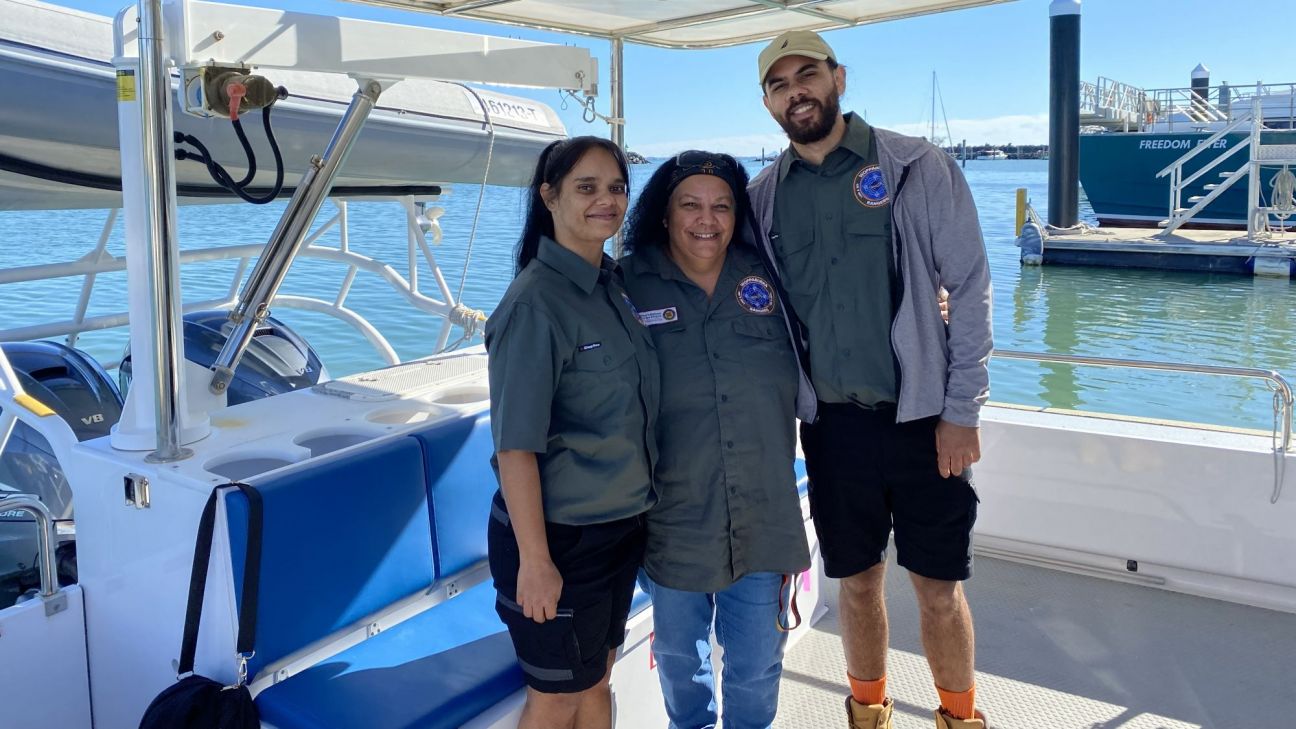
Caring for Country is at the heart of the Woppaburra Rangers' work on Woppa. Through the broader Restoration for Balban Dara Guya and Putney Beach initiative, Rangers are restoring culturally significant wetlands and waterways, improving ecosystem health, and creating employment opportunities. The project focuses on protecting important cultural sites, improving water quality and supporting the long-term health of seagrass meadows, dugong habitat and surrounding coastal ecosystems.
This commitment to caring for land and sea Country is reflected in a culturally inspired oyster reef restoration project at Balban Dara Guya (Leekes Creek), a site of enduring significance to the Woppaburra people. The project aims to restore 77 hectares of mangroves, salt marsh, and shellfish reef ecosystems on the island.
Commencing in 2024, the project is being led by the Woppaburra TUMRA Aboriginal Corporation (WTAC) in collaboration with Ecosure, with support from OzFish and Central Queensland University. Woppaburra Rangers were joined by Yuwi, Gidarjil and Darumbal Indigenous Land and Sea Ranger groups, working together to achieve project outcomes that aim to heal vegetation, waterways and sea Country.
Activities and outcomes
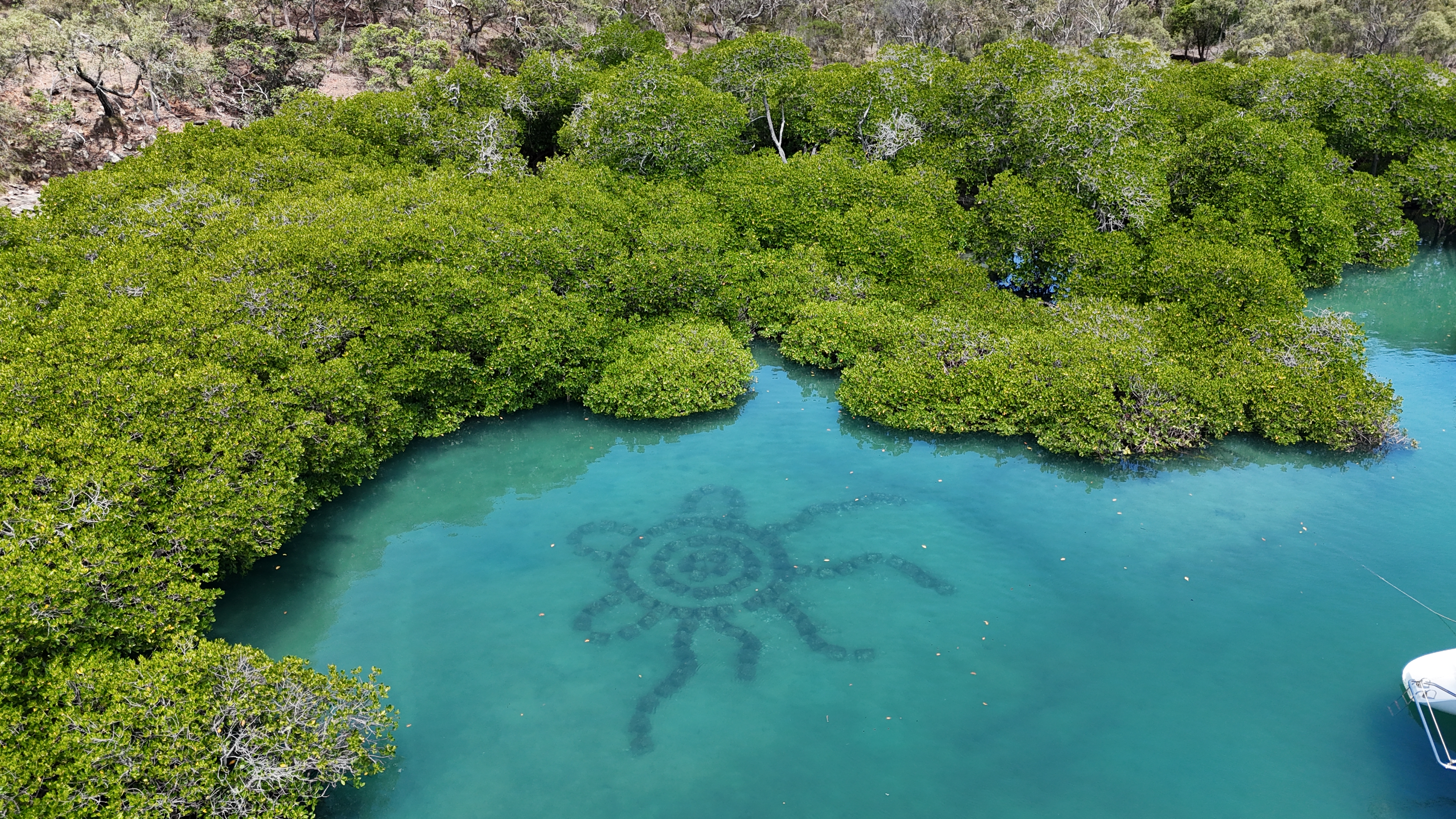
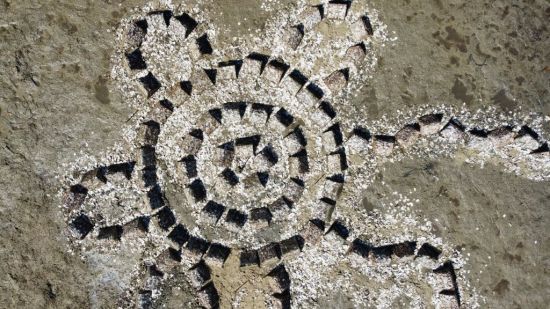
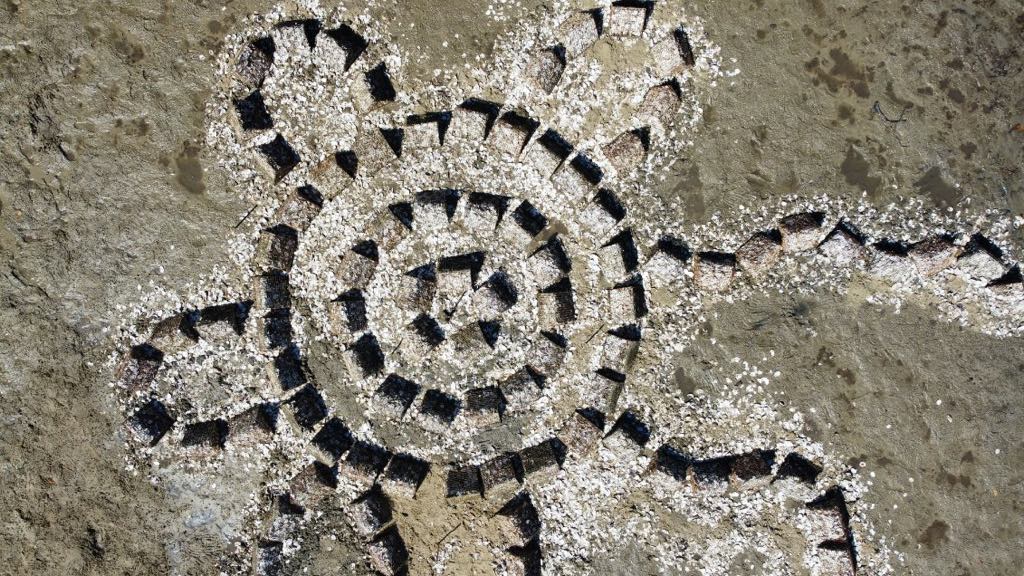
At the heart of the project is a culturally significant oyster reef installation designed by Woppaburra artist Debra Witteman. Her design reflects traditional gathering places and the movement of people across land and sea Country. The circles in her artwork represent meeting places, while the lines symbolise the people traversing the waters between islands, connecting with one another and Country.
The reef structures were installed at Leekes Creek, a site of cultural importance where Woppaburra people have sustainably harvested waku (oysters) for many generations. The project aims to restore these degraded shellfish reefs, which have suffered from overharvesting over the past 150 years. Waku hold deep cultural significance for the Woppaburra people, serving as a food source and also being used in jewellery making and men’s ceremonies. Baseline assessments at Balban Dara Guya identified six shellfish species, including healthy populations of longbums (Telescopium telescopium), another important traditional food source.
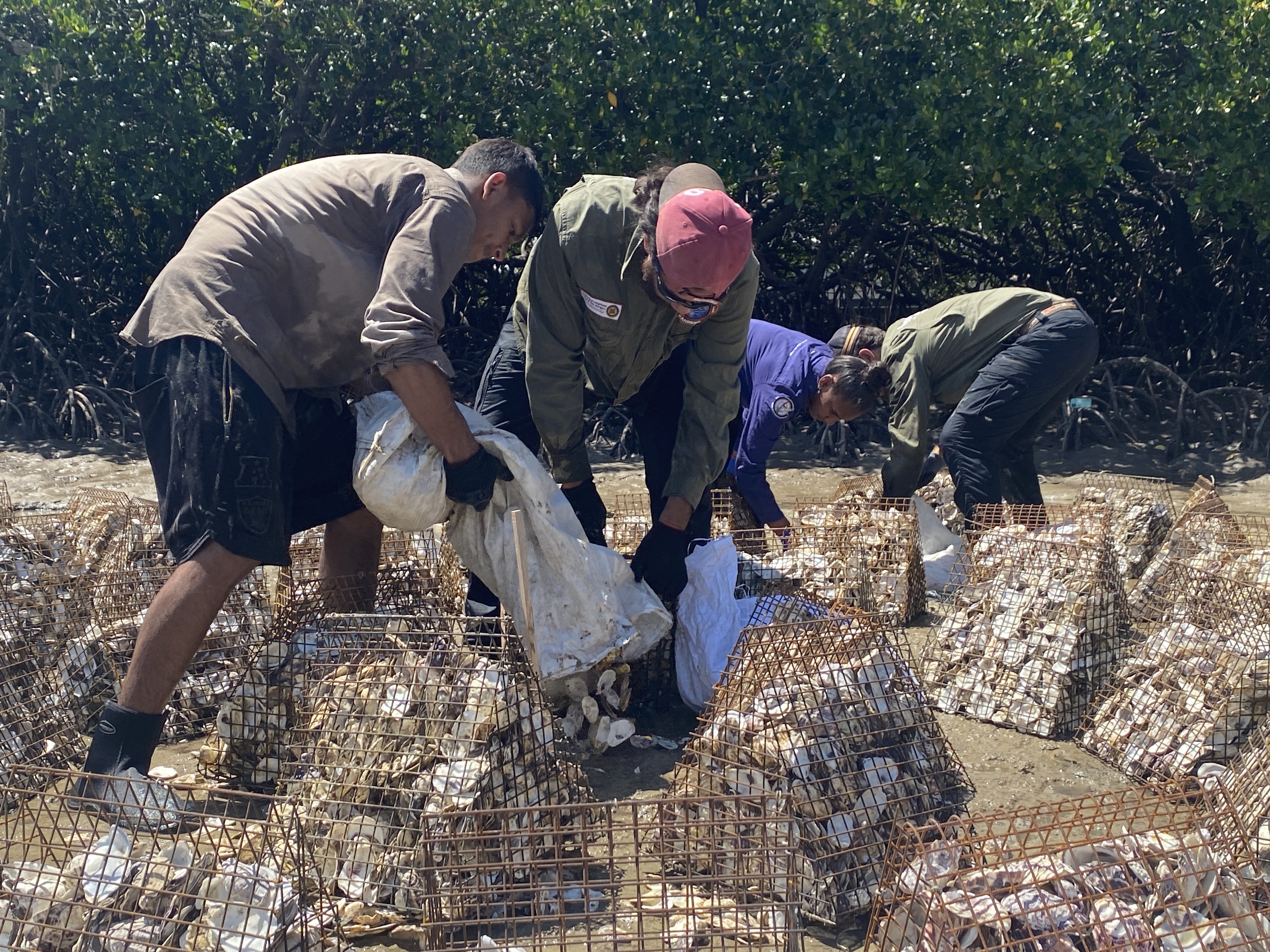
To rebuild the reefs, up to 100 robust oyster baskets (ROBs) were installed. These structures, made from recycled oyster shells and metal cages, will serve as the foundation for new shellfish reefs. Once established, these reefs are expected to improve water quality, provide habitat for fish and invertebrates, and support the overall health of the wetlands. Shellfish reefs offer numerous ecological benefits, including improving water quality and providing food and shelter for marine life while also protecting coastlines from erosion.
This initiative represents a first-of-its-kind approach in Australia, combining cultural storytelling with ecological restoration to create a sustainable future for Woppaburra land and sea Country.
Learnings and next steps
The culturally inspired design of the oyster reef installation demonstrates how cultural heritage can guide environmental restoration in ways that honour and preserve Indigenous culture and traditions.
Additionally, the collaboration between WTAC, Ecosure, OzFish, CQ University, and Indigenous ranger groups such as the Woppaburra, Yuwi, Gidarjil, and Darumbal has underscored the importance of partnerships in achieving shared environmental and cultural goals. The project has also provided valuable insights into the ecological benefits of oyster reefs, including their role in improving water quality and supporting marine biodiversity.
This project is funded by the Australian Government’s Department of Climate Change, Energy, the Environment and Water (DCCEEW), with ongoing support from Livingstone Shire Council, Queensland Parks and Wildlife Service, and the Department of Natural Resources, Mines, Manufacturing and Regional and Rural Development.