Mount Morgan remediation project
Mount Morgan water treatment plant changes
Learn about recent changes to treated water release volumes and the environmental conditions that apply. Mount Morgan water treatment plant changes 321.5 KB)
Mount Morgan was founded as a gold mining town in 1882 with its mining operations continuing until November 1990. It was the largest gold mine in Queensland in the 19th and early 20th centuries, with about 250 tonnes of gold and 360,000 tonnes of copper extracted from the mine and about 134 million tonnes of waste rock and tailings generated.
The site consists of a large water-filled open cut pit, large waste rock dumps and tailings storage facilities as well as various historic buildings and infrastructure left over from mining and mineral processing.
In March 1991 an agreement between the Queensland Government and Mount Morgan Limited provided the requirements for decommissioning of the operations prior to the government releasing Mount Morgan Limited of further site commitments. We subsequently took over management of the legacy issues at the mine in January 1993 after the decommissioning of operations.
The Queensland Government's view is that commercial reprocessing of the tailings for gold would help to support site remediation.
Heritage Minerals Pty Ltd is currently developing a project to recover gold from legacy tailings and mullock heaps through reprocessing activities, which is expected to commence operations in 2026.
Heritage and tourism
The Mount Morgan mine remains an area of historical interest. Approximately half of the site is listed on either the Queensland Heritage Register or the National Trust of Australia (Queensland) Register.
The site includes Fireclay Caverns excavated between 1906 and 1927 for clay to supply local brick making. Fossilised early Jurassic-aged dinosaur footprints and trackways were discovered in the limestone ceiling of the caverns in the 1950s.
Tourism operations into the caverns were stopped in 2010 after several rockfalls. General mine site tours ended for safety reasons in 2018.
In order to facilitate potential future tourism opportunities, and as part of the transfer of mining leases to Heritage Minerals in 2020, the Queensland Government removed surface mining tenure from a number of potential tourism areas, including the Fireclay Caverns.
This may allow for potential appropriate and safe future tourism ventures outside of mining operations at the site.
- View a glossary of mining terms used on this page.
Project snapshot
Region: Central Queensland
Location: 32km south-west of Rockhampton, Latitude -23.641111, Longitude 150.372101
Commodity: Gold and copper
Mining type: Open cut and former underground
Date of abandonment: N/A
Status: Ongoing care and maintenance and re-commercialisation.
Native title interest: Gaangalu Nation People represented by Queensland South Native Title Services Limited
Public land registers: Listed on the Environmental Management Register
Photo gallery
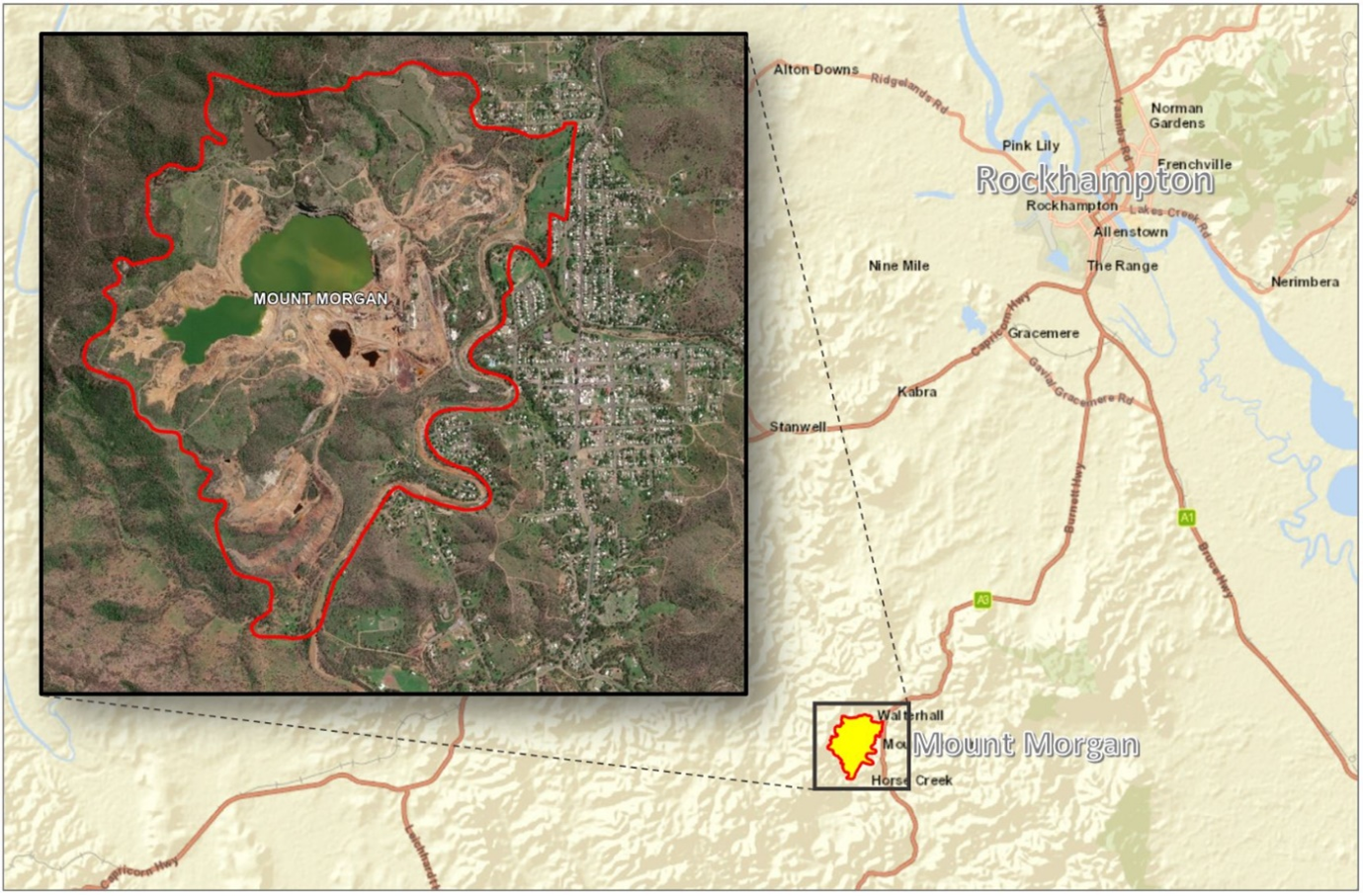
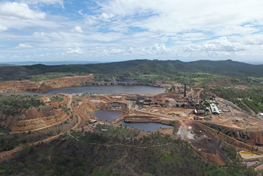
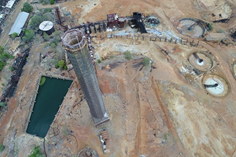
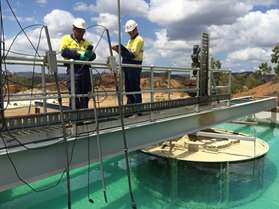
Key risks
Health and safety risks associated with:
- open pit, tailings storage facilities, waste rock stockpiles and historic mine shafts
- potential instability of the Mundic Gully Embankment in a pit overflow situation
- mine affected water on site and in the Dee River near the mine site where water is not suitable for drinking or recreation (for example swimming or fishing)
- unstable historic structures and buildings.
Environmental risks associated with:
- uncontrolled release of mine-affected water from a mine pit overtopping event
- poor quality water associated with acid mine drainage on-site and downstream in the Dee River, including tailings storage facilities and tailings stored in dams along the Dee River.
Completed works
- Heritage Minerals has been contracted by the department to operate the Water Treatment Plant.
- Heritage Minerals contracted to construct a Cofferdam to separate the Open Cut Pit and Sandstone Gully to assist with both site water management and facilitation of Heritage Minerals reprocessing project.
- Sealing of the Dam 8 upstream wall and installation of high-capacity pumps to reduce the mine pit catchment by more than 40%. This will reduce the amount of freshwater entering the open-cut pit in any given wet season, assisting in maintaining lower pit levels and reducing ongoing water treatment costs.
- Upgraded high-voltage electrical infrastructure to provide greater safety and security of power for site operations.
- Implementation of an environmental monitoring program, with stream and groundwater quality sampling routinely undertaken down the Dee River and into the Don River. Monitoring is extended further downstream during large flood events.
- Systems to provide downstream landholders with notice of potential water quality impacts from large rain events.
- Removal of unstable historic dams adjacent to the mine site including 400,000m3 of tailings and acidic water.
- 3D image survey of historical buildings and site characteristics.
- Make-safe works for 18 unstable buildings and removal of asbestos material in line with Queensland Heritage Council approvals.
Planned works
- Continue operations and maintenance activities, evaporation, seepage interception and pump back activities.
- Continue to work with Heritage Minerals to facilitate reprocessing on site.