Croydon remediation project
Gold was discovered in Croydon in 1882 and Croydon Goldfield was proclaimed on 18 January 1886 with discoveries in the Tabletop area late in 1886. As a result, there are historical mining workings and residual wastes in the area.
More recently, large-scale gold mining was conducted at mines to the north-east of Croydon, including the Federation and La Perouse mines. Mining ceased in 1991 and the parent company was dissolved in 1994, forgoing rehabilitation liabilities.
The mining leases were re-offered by tender. As a condition of the lease agreement, the successful company started rehabilitation of the processing plant area, tailings dam and waste rock dumps, as well as other disturbances from mining and exploration. However dwindling reserves and poor prices resulted in the operation finally ceasing in 1997.
The Croydon sites include:
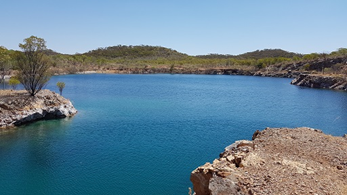
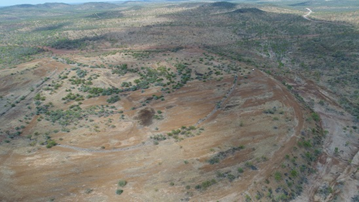
- Federation site, which consists of 2 open-cut pits, an underground portal or entrance, heap leach pads, waste rock stockpiles, unmaintained infrastructure
- Golden Gate tailings storage facility (TSF)
- Glencoe pit
- historical mine workings and wastes.
Currently, part of the Federation site has been re-commercialised and there is a mining lease over part of the site. We are working with the mining lease holder to manage the residual risks at the site.
- View a glossary of mining terms used on this page.
Project snapshot
Region: North Queensland
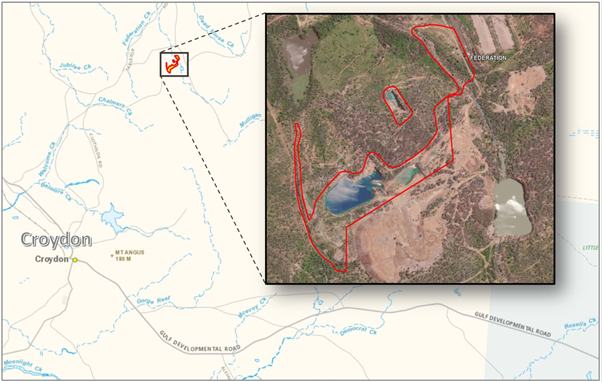
Location: 520km west of Cairns and 150km south-east of Normanton in the Gulf of Carpentaria, Latitude -18.096821, Longitude 142.302307
Commodity: Gold
Mining type: Open cut and underground
Date of abandonment: October 2004
Status: Care and maintenance, partial re-commercialisation
Native title interest: Tagalaka People represented by the Tagalaka Aboriginal Corporation RNTBC
Public land registers: Listed on the Environmental Management Register
Photo gallery
Key risks
Health and safety risks associated with:
- open pit, waste rock stockpile and underground/mine entrance
- unstable waste rock stockpiles
- open shafts and underground workings from historical mining.
Environmental risks associated with
- poor-quality water as a result of acid and metalliferous drainage from mine pits, low-grade ore stockpiles, leach heaps, waste rock dumps and tailings storage facility
- ingestion of mineral precipitates (salts) and mine-affected water outside stock water guidelines by livestock
- historical tailings deposits resulting in environmental hazards
- deterioration of the tailings storage facility cap and increased infiltration of rain due to pooling water on the cap.
Completed works
- Fencing to exclude cattle from Federation pit and waste stockpiles, low-grade ore stockpiles and waste rock dumps.
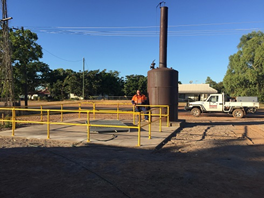
- Installation of pump systems to capture acid and metalliferous drainage water to reduce the amount released to the environment from the Federation pit, low-grade ore stockpiles and waste rock dumps.
- Re-commercialised areas around the Federation pit and waste rock piles to an industry partnership. This is allowing hazardous waste material to be processed and disposed of appropriately.
- Investigation and development of remediation options for the Golden Gate tailings storage facility (TSF), to improve the existing capped surface runoff and further reinforce perimeter embankments.
Planned works
- Ongoing environmental monitoring and water management activities.
- Seek funding to undertake further improvements to the Golden Gate TSF.
- Seek funding for investigation and remediation of scattered historic small-scale tailings deposits.