E-Bike rules in Queensland
New age and licensing rules apply from 31 August 2026.
On this page
What is an e-bike?
An electric bike (e-bike) is a bike that has pedals as the primary source of power, but has a small electric motor that provides assistance to:
- start riding
- go up hills
- ride against the wind.
Power rules
To be legal to ride in public places, an e-bike must:
- have a motor with a maximum continuous rated power output of 250 watts
- be pedal powered with motor assistance up to 25 km/h
- have a motor that stops providing assistance after 25 km/h
- be throttle-controlled, only up to 6km/h, to help you start moving
- meet the European Standard EN 15194 and display a compliance label.
Some examples of legal e-bikes


Most legal e-bikes comply with the standard for Electric Power Assisted Bicycles (EPAC) EN 15194. Look out for a compliance sticker on the bike like this:

Who can ride
As of 31 August 2026, you must be 16 and hold a valid driver licence (minimum Learner) to ride an e-bike in Queensland.
- Equivalent interstate or overseas licences are recognised.
- You must not ride if your licence is expired, suspended or disqualified.
- You don’t currently need registration or insurance to ride a legal e-bike.
If you're unlicenced or under 16 years old
Some people might not be able to hold a licence because they have a medical condition, are under 16 years old, or can't hold a licence for other reasons. In these cases, there are exemptions available to help you keep riding.
Supervision exemption
If you are under the age of 16 and can't get your learner licence yet, or are 16 to 17 years old but don’t yet hold a licence, you can still ride your device if you are supervised by your parent or caregiver.
You can ride anywhere that e-bikes are allowed, as long as your parent, grandparent, or legal guardian is within a safe distance to give you instructions.
Place exemption
In some areas designed for recreational riding where pedestrian traffic is low, you do not need to be a specific age or hold a licence to ride.
For example, riding on rail trails, mountain bike trails, or private recreational bicycle facilities.
Medical or disability exemption
If you are aged 16 or older and cannot hold a driver licence because of a medical condition or disability, you may be able to get a driver licence exemption.
To be exempt, fill out the E-Mobility Driver Licence Exemption form (F5464) and have it signed by a health professional that knows you and your medical history. You must carry the completed form with you while riding and show it to a police officer if asked.
This exemption cannot be used if your driver licence is suspended, disqualified, or cancelled for any reason other than your medical condition or disability.
Where you can ride
You can ride an e-bike on most roads and paths in Queensland, unless signs say bikes are not allowed. You must follow the bicycle rules when riding an e-bike. You must follow the same speed limits as personal mobility devices on footpaths and shared paths.
Learn more about footpaths and shared paths.
Speed limits
On all footpaths, e-bike riders must keep to a speed of 12km/h maximum.
On all shared paths, e-bikes must keep to the signed speed limit and slow down to 12km/h when riding past a pedestrian.
Illegal devices
The following devices are illegal to ride on public paths or roads in Queensland:
- petrol-powered bikes
- electric bikes with motors more powerful than 250 watts maximum continuous rated power
- bikes that only use a throttle (for example, no pedalling required to power the bike)
You can be charged with significant fines if you, or your children, are caught using an illegal device on the road. Police can also seize, impound and destroy illegal devices.
You may be subject to multiple fines if caught riding illegally – for example, police can issue cumulative fines to riders caught riding an illegal device while on a prohibited road and speeding.
Parental responsibility
From 1 July 2026, parents and guardians can be fined for allowing their child to ride an illegal device.
You can be charged with unregistered, uninsured and unlicensed offences if you or your child/ren are caught using an illegal device on the road. Police can also confiscate and impound illegal devices.
Some examples of illegal devices
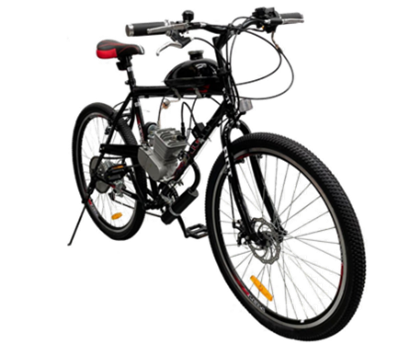
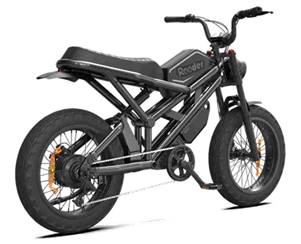

Can I modify my e-bike?
No, all e-bikes must be fitted with compliance labelling that meets the EN 15194 European Standard. The EN 15194 standard does not allow tampering of devices after being manufactured. This means that modifications like after-market conversion kits are not compliant with the standard and would make the device illegal to ride in public.
What if my e-bike says it can be ‘unlocked for private property use’?
Devices fitted with a motor more powerful than 250-watts of maximum continuous rated power are not allowed to be used on any public paths or roads in Queensland, because they do not meet the requirements of the standard EN 15194.
Under the European standard, e-bikes must have a maximum continuous rated power of no more than 250-watts. E-bikes which have been 'locked' via software do not meet this requirement because they have more powerful motors.
High-powered, but 'locked' e-bikes are illegal devices and are subject to significant fines, seizure and destruction by police.
Rider rules
When riding an e-bike you must follow the bicycle rules. Important points to note:
- always wear a helmet
- obey speed limits (motor can only help you up to maximum 25 km/h)
- only carry passengers if the bike is made for it—and they must wear a helmet too
- don’t use your phone while riding (unless it’s in a cradle and hands-free)
- give way to pedestrians on footpaths and shared paths
- don’t ride on the pedestrian side of separated paths
- don’t drink and ride
- don’t ride under the influence of drugs
- no riding on motorways or anywhere a ‘no bicycle’ sign is installed
- if there’s a crash, stop, help anyone hurt, and share your contact details.
If you break the rules, you may get a fine.
Know the difference: e-bikes verses other electric bikes
Some electric vehicles look like e-bikes but are actually electric motorcycles. These:
- don’t have pedals
- can go very fast under throttle power
- look like mopeds or dirt bikes.
If used on a Queensland road, these vehicles need registration, insurance, and a licence. They are not allowed on paths.
Police have the power to seize and destroy illegal devices from 1 July 2026.
Examples of electric vehicles that can be registered and are often confused with standard e-bikes
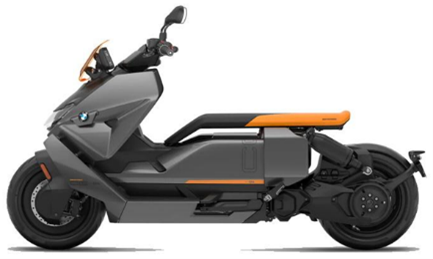


Not all electric motorcycles can be registered. If the device doesn’t meet safety standards for general or conditional registration, it cannot be used on roads, paths, or any public place.
If your device doesn’t meet the rules, it must only be used on private property.