Riding e-bikes and e-scooters on footpaths and shared paths
Speed limits
From 1 July 2026, there are new speed limits for e-bikes and e-mobility devices traveling on on footpaths and shared paths.
These laws balance pedestrian safety with rider stability and allow higher speeds on high-quality shared paths, like bikeways and rail trails, where there are less pedestrians.
In Queensland, footpaths and shared paths have different meanings.
Footpaths
What is a footpath?
- Queensland legislation defines a footpath as an area open to the public that is designed for primary use by pedestrians.
- Footpaths are mostly used by walkers, prams, and mobility aids such as wheely walkers and motorised mobility devices like motorised wheelchairs.
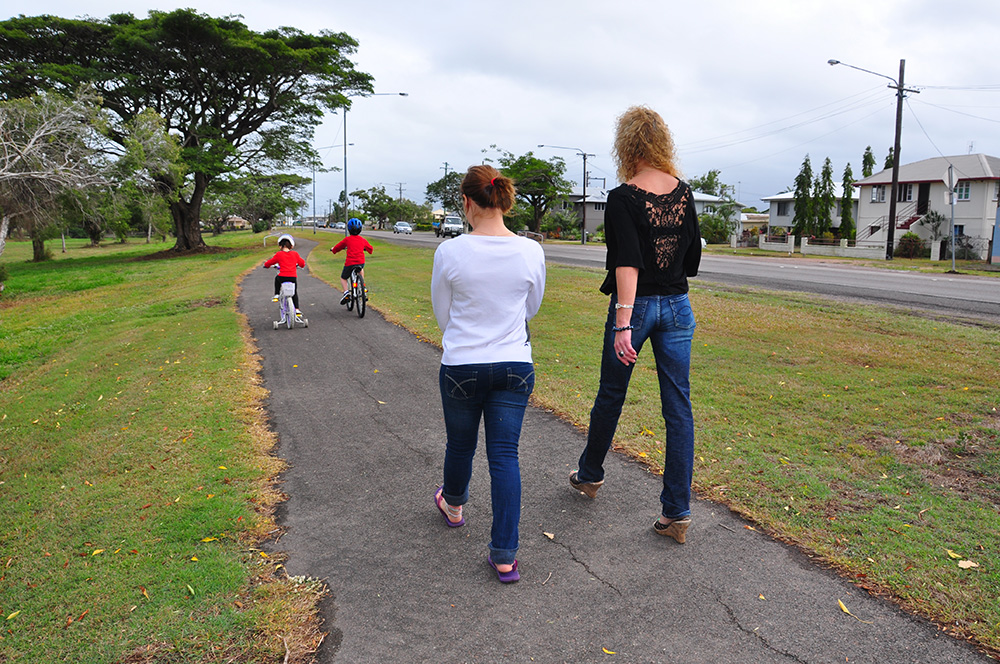
- Footpaths typically look narrow, because they are not designed for bike riders travelling in two directions.
- It is not common for footpaths to be signed or to have road markings. They are a usually a basic concrete strip.
- Movement on footpaths is often at a low speed with a priority of pedestrian safety and comfort.
Who can use a footpath?
- While footpaths are primarily designed for people walking, wheeling or using other mobility aids, bicycle and personal mobility devices are also allowed on footpaths.
- Pedestrians take priority on footpaths, so riders need to be aware of their surroundings and ride with care.
On all footpaths, e-bike and personal mobility device riders must keep to a speed of 12km/h maximum.
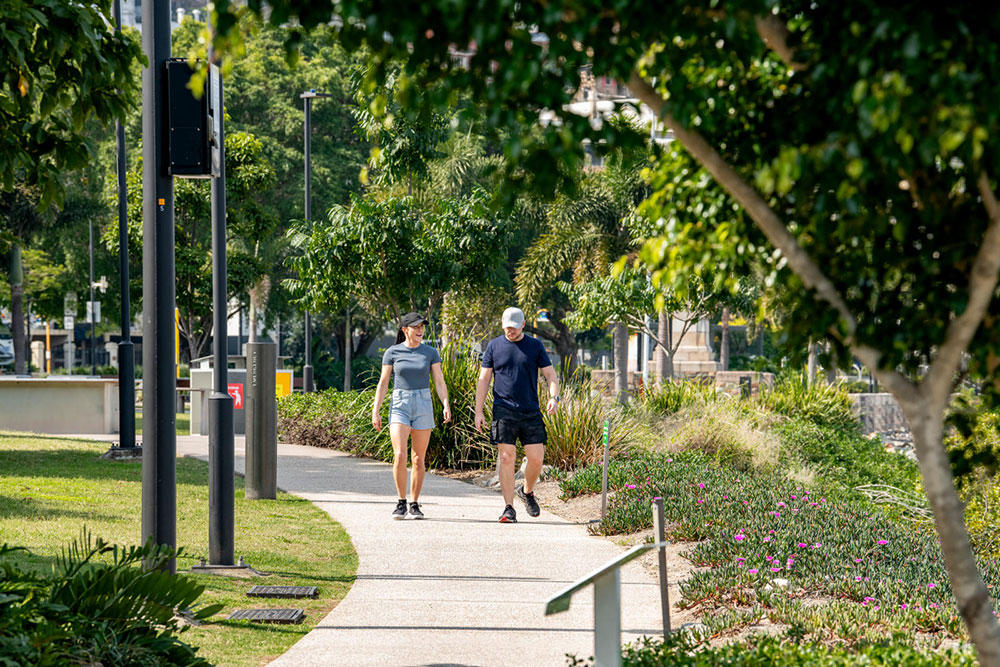
Footpath examples

Shared paths
What is a shared path?
- Queensland legislation defines a shared path as an area open to the public that is designed for primary use by pedestrians and riders of bicycles, e-bikes and personal mobility devices.
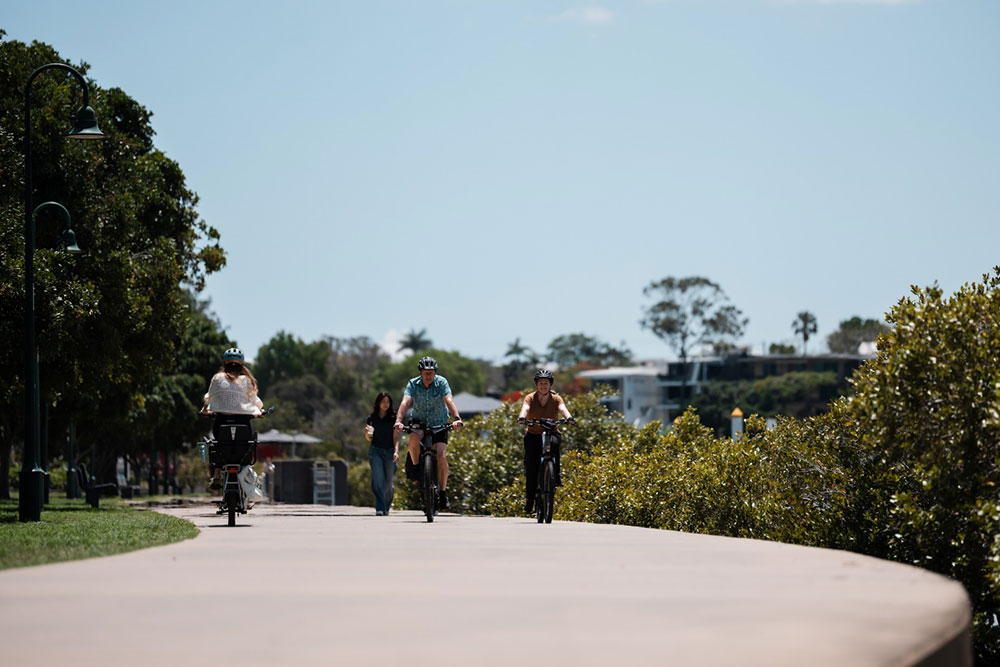
- Shared paths are mostly used by walkers, joggers, bicycle riders and people with prams or mobility aids.
- Shared paths are typically built wider than footpaths, to provide enough space and visibility for two-way traffic.
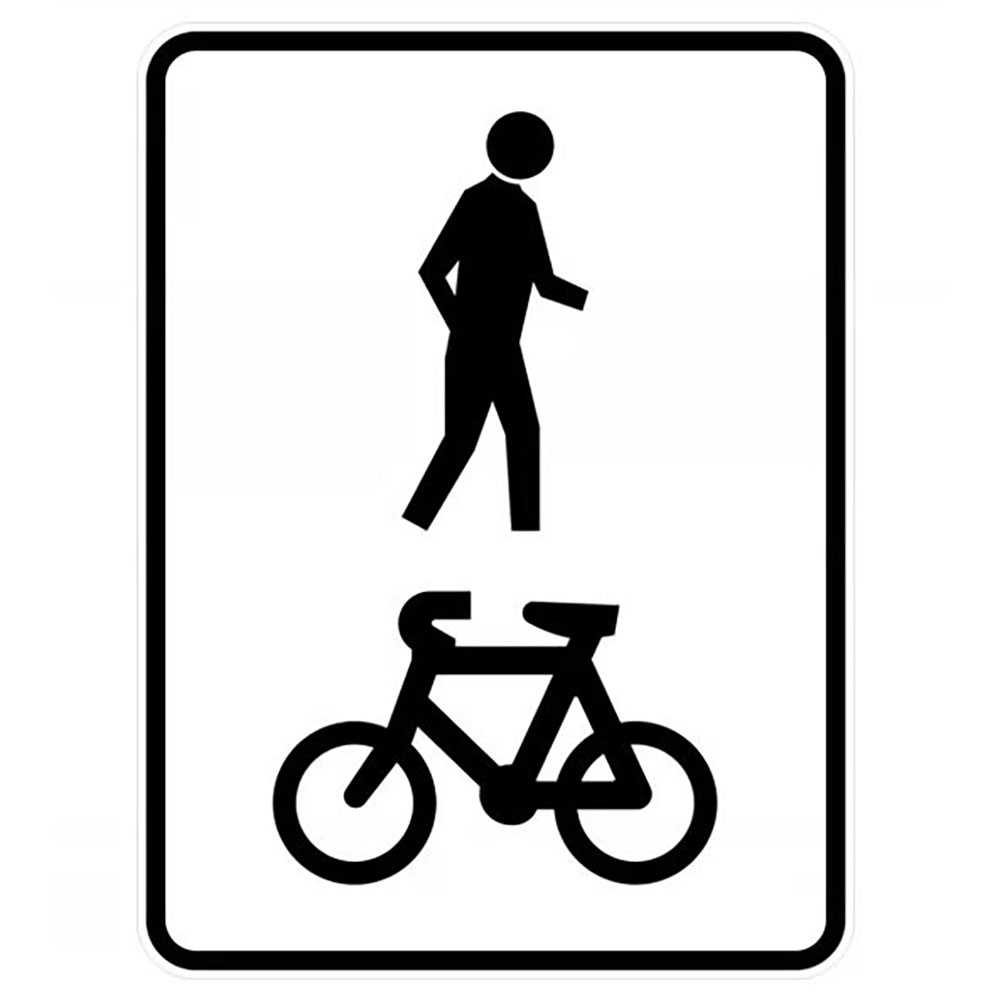
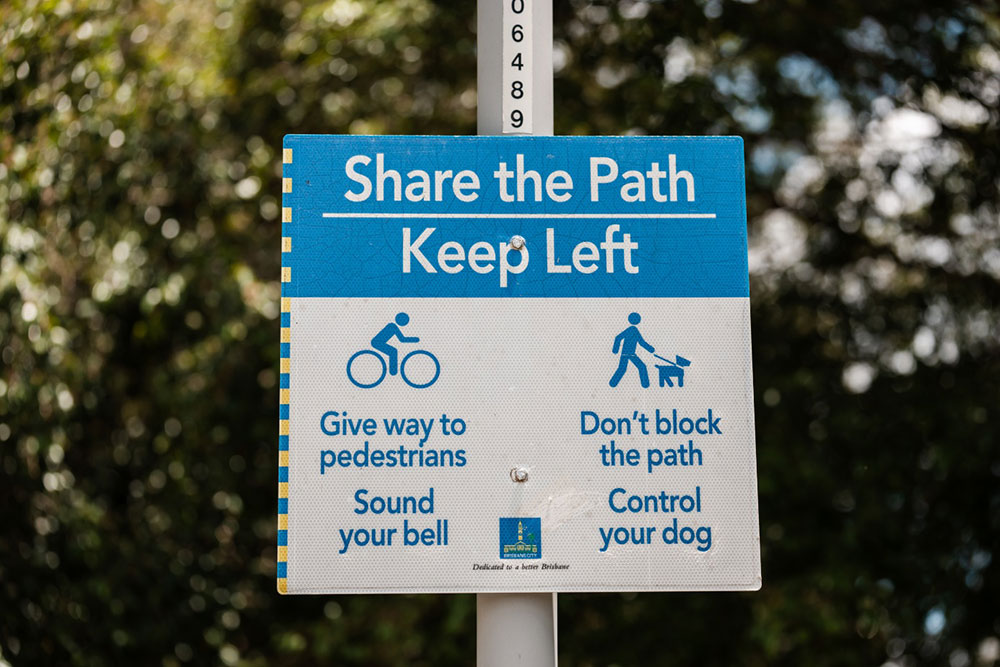
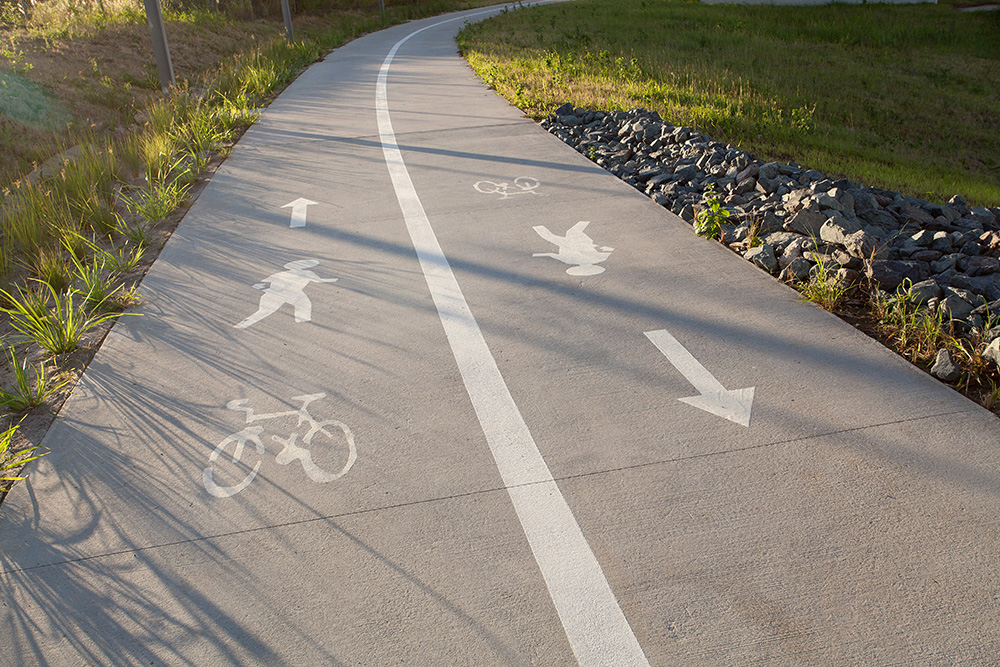
- Shared paths will often be signed or marked to show that both pedestrians and riders can use the path. An example is provided below.
- It's important to remember that not all shared paths are made of concrete. Shared paths can be found in national parks and on rail trails.
Who can use a shared path?
- Anyone walking or riding can use a shared path.
- Pedestrians take priority on shared paths, so riders need to be aware of their surroundings and ride with care.
On all shared paths, e-bike and personal mobility device riders must keep to the signed speed limit and slow down to 12km/h when riding past a pedestrian.