Leaving hospital, attending clinics and other details
By the time of discharge from the Transplant Unit (Ward 4BT) patients are regaining their well- being, strength and independence with care needs and daily living activities. Most drains and drips have been removed. Despite patients and their support people often describing that they feel a little nervous about how they will manage everything in the first few days and weeks, most do extremely well. The treating team is close by to assess and respond quickly to any concerns.
Key points
- Conversations about your discharge plan will begin early, once you are on the transplant ward (4BT). Increasing activity prior to discharge helps build strength and aids recovery. When discharge is near, patients are encouraged to spend some time off the ward with their support person.
- Once discharged from the ward the patient returns to outpatient clinic the following morning with their support for the beginning of regular post-transplant outpatient appointments.
- The outpatient clinic staff provide detailed information about the frequency and process of the outpatient appointments. During the first few weeks the appointments are daily or near -daily, sometimes including weekends. The appointments reduce over time to 1 to 3 times each week. By the fourth month after the transplant, outpatient clinic appointments are usually 1 to 2 times monthly.
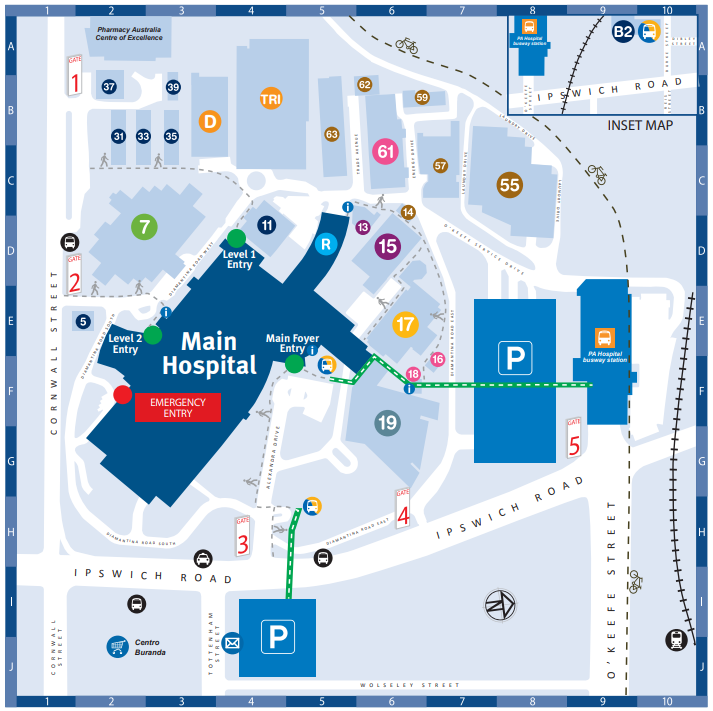
- During the first few weeks after discharge, the patient attends the outpatient clinic near the Transplant Unit, Ward 4BT on the 4th floor near the blue lifts. In the weeks afterwards, the patient commences attending the Monday morning outpatient clinics held in the PAH Specialty Outpatients Clinic located in Building 15 from the main Hospital, on level 2. The Transplant Unit and W4BT outpatient clinic support the management of transplant patients who need review outside Building 15 and Burke Street clinic times.
- The support person or carer is very important during the first few weeks, helping with such things as:
- Transport to the PAH and support for the patient to attend clinics. Patients cannot drive for the first 4 to 6 weeks after their surgery.
- Meal and food management, online or in-store shopping, meal deliveries, cooking
- Alerting staff to any concerns
- Assisting with medication, if this arrangement is in place
- Supporting with activities to help the patient recover and rehabilitate, for example exercise such as going for walks; and maintaining social connections.
- Patients who live in the Brisbane area are discharged directly to their home or to that of their locally-based support person. Patients who live in near-regional areas need to stay nearby and accessible to the PAH for about 6 to 8 weeks. Patients from more distant regional areas usually start their temporary relocation to Brisbane before the transplant. The distant regional patients stay in Brisbane for 12 weeks after their transplant. During these times a support person is required.
- All new liver transplant patients attend the Monday morning Outpatient Liver Transplant Clinic located in Building 15 from the main Hospital, on level 2 during the first 12 months after their transplant.
- From the second year after their transplants onwards, patients attend the Wednesday morning clinics either at Burke St or by Telehealth.
Accommodation and subsidies
Information about accommodation facilities local to the PAH and regional patient subsidies to help with accommodation cost is available from their Regional Hospital, the patient travel office and from the Queensland Liver Transplant Service social worker.
- Accommodation guide 369.2 KB)
- Queensland Patient Travel Subsidies
- New South Wales Patient Travel Subsidies
Carer payments
It is recommended that all questions regarding Centrelink Carer Payment and Carer Allowance be addressed to Centrelink. There is clear criteria to be met in relation to the degree of the patient’s disability, the nature of the care needs and the time for which care is likely to be needed.
An assessment tool is applied and scored. One of the criteria is that the care needs extend past 6 months. The experience of the Queensland Liver Transplant Service is that most patients enjoy a good recovery and are fully independent of post-surgical care by 3 months after their transplant.
Centrelink income support
Patients who already receive Centrelink income support whilst waiting for a liver transplant may continue to receive income support in the months after the transplant. If you already report your income and circumstances to Centrelink, it is important to continue doing so as per usual. This way any changes to your income or employment circumstances can be noted and the relevant income support adjustments made.
If required, a medical certificate can be requested from your medical team while you are an inpatient or attending your outpatient appointments. A carers certificate can also be requested