Admission for the transplant
Receiving a phone call to say there is a possible liver available for transplant can result in a mix of feelings - excitement, anticipation or even fear. It is the phone call patients have been waiting for yet feel most nervous about.
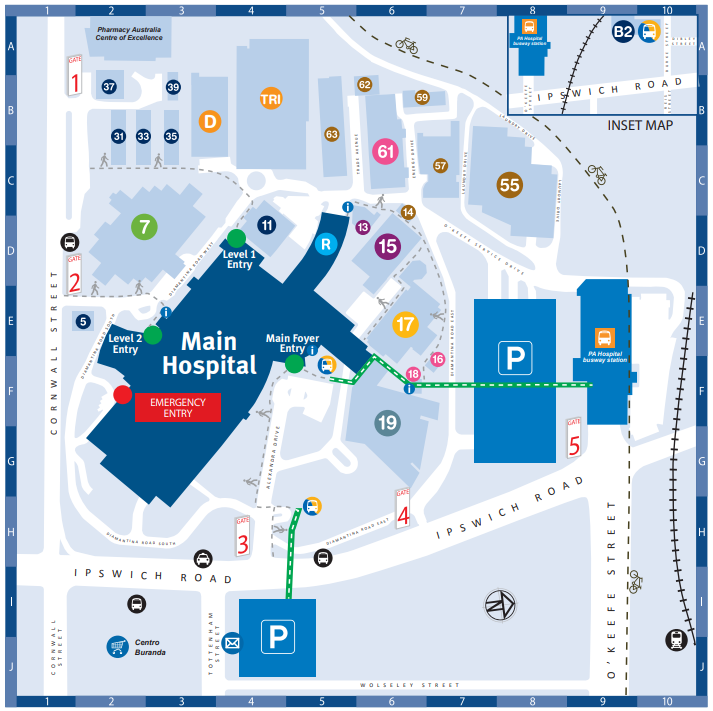
It is important to have a transport plan to get to the PAH. A family member or another support person could bring the patient to hospital by car, taxi, uber or similar. An ambulance is not called to bring people in for liver transplant, unless the emergency is directly related.
Patients who have been offered a liver transplant need to make their way safely to hospital with pre- packed small bag of toiletries and medications and if possible, a support person. The patient is told at the time of the call where to go once at the PAH.
The Transplant Unit staff will talk with the patient and support person before the operation. If the transplant does go ahead, your support person usually waits away from the hospital. The surgeon will phone the contact person to discuss the outcome of the surgery.
Being mindful that this is a stressful time for next of kin, consider the following:
- Patients need to be prepared from the moment they are placed onto the waiting list. The transplant can happen at any time from then onwards.
- Choose a family member or friend to be the point of contact for well-wishers.
- A regular group email or text message can be a useful way to communicate with friends and family.
The procedure from when you arrive on the transplant ward (4BT) is similar to any pre-operative preparation. Normal investigations including blood tests, chest X-ray and assessment for fitness to have an anaesthetic are followed by nipple to knee shave, a surgical shower and an insertion of an intravenous line. In most cases you will have signed your consent forms for the transplant operation at the time you were listed for transplant.
While your operation is being organised, the donor retrieval operation is also being organised. At this stage there will still be some uncertainty around the donor suitability. The donor liver needs to be viewed by the other surgical team to confirm organ suitability. In some cases, the final decision may be delayed as a donor liver biopsy may be needed. When the OrganOx machine is used, the donor liver is monitored for 6 hours before a decision about suitability can be made. Occasionally patients are brought in as a “backup recipient”, in the event another pre- transplant patient’s surgery is unable to go ahead. All this is fully explained at the time.
The liver transplant operation will be cancelled in about 20 per cent of cases when the donor liver is not suitable. The ward staff will be called, if the donor liver is suitable and advised what time the liver transplant operation will start.
Fluids and medications are commenced about 2 hours before leaving the ward for the operating theatre. These medications including antibiotics, anti-fungal and anti-viral medications are to assist in protecting you from infections and transmission of viruses from the donor.
There are 3 different anti-rejection or immunosuppressive drugs, which are given to stop the recipient’s immune system from attacking the new liver as soon as blood supply is established. Some of these medications need to be taken lifelong.
The patient leaves the ward to go to theatre, and from there will go to the Intensive Care Unit for 24–48 hours, on average. The family are told not to wait in the hospital for the length of the operation, as there could be many hours involved.
When stable enough, the patient will return to the Transplant Unit for recovery. The inpatient stay is usually 7–14 days, depending on the pre-operative condition of the recipient. There are however several factors that can lead to a longer stay in hospital. Some patients may need 3–4 months in hospital post-operatively, and whilst these situations are uncommon, the fact that they are not unknown, suggests that you and your family need to be prepared for absolutely any event.