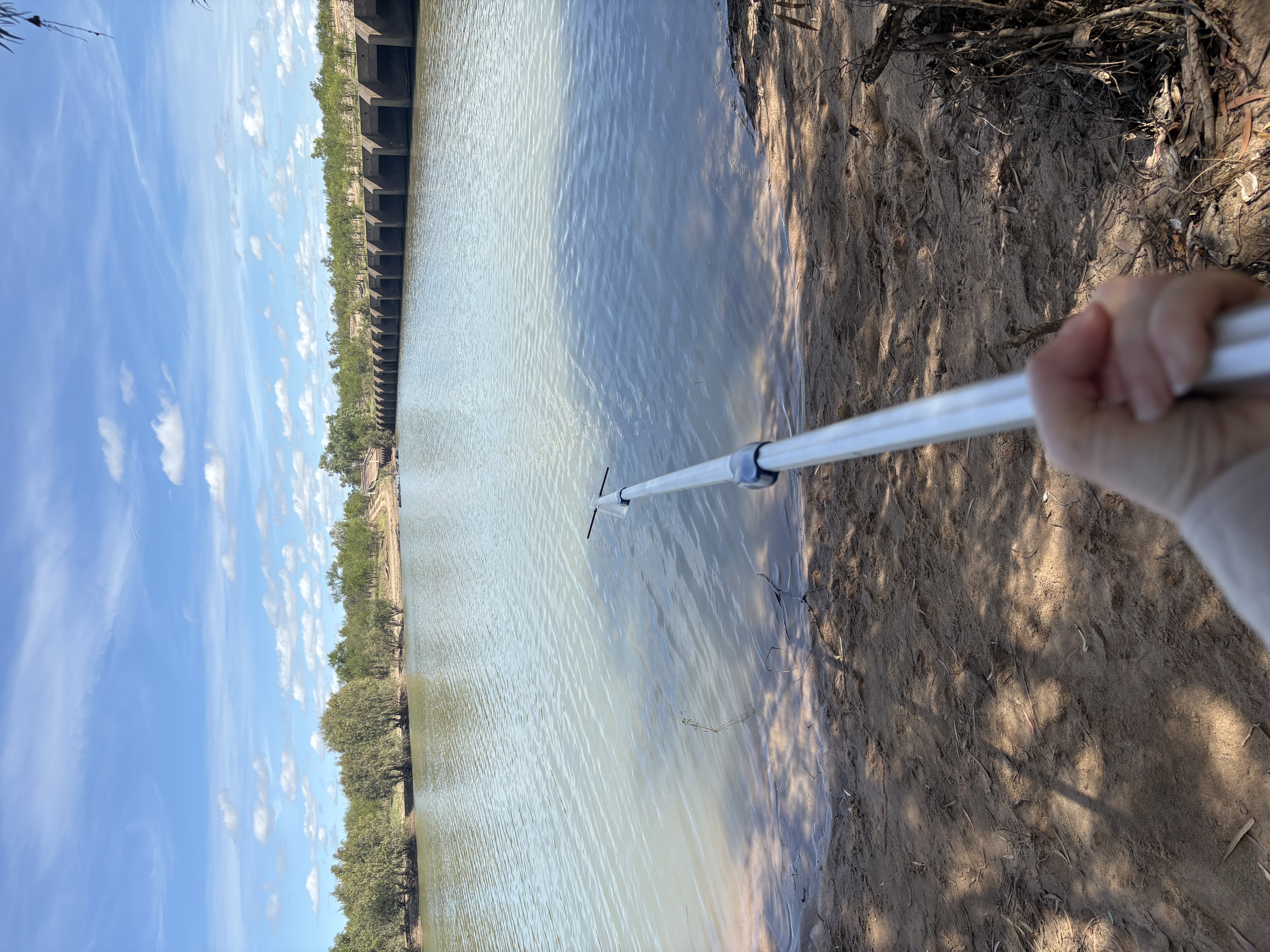
Leichhardt River eDNA sampling case study
Disaster Recovery Funding Arrangements Environmental Recovery Program – Environmental Investigations Program, Northern and Central Queensland Monsoon and Flooding, 20 December 2022 – 30 April 2023
The 2022-23 Northern and Central Queensland monsoon and flooding event led to widespread ecological damage across the Southern Gulf region. Following this, The Department of Environment, Tourism, Science and Innovation (DETSI) collaborated with the Department of Local Government, Water and Volunteers (DLGWV), and TropWATER/JCU to develop a project to assess the distribution of key species within the Leichhardt River through environmental DNA (eDNA) sampling.
The project sought to determine the distribution and detect the presence of the critically endangered Largetooth sawfish (Pristis pristis) and the culturally important northern snake-necked turtle (Chelodina rugosa) in the Gulf of Carpentaria, focusing on the Leichhardt River. The invasive Mozambique Invasive (Oreochromis mossambicus) have invaded most river catchment across the eastern coast of Queensland, the project also sought to determine if the species had exploited the recent flooding event to spread further across the Southern Gulf region. eDNA sampling was used as it is a non-invasive, cost effective, and less labour-intensive method.
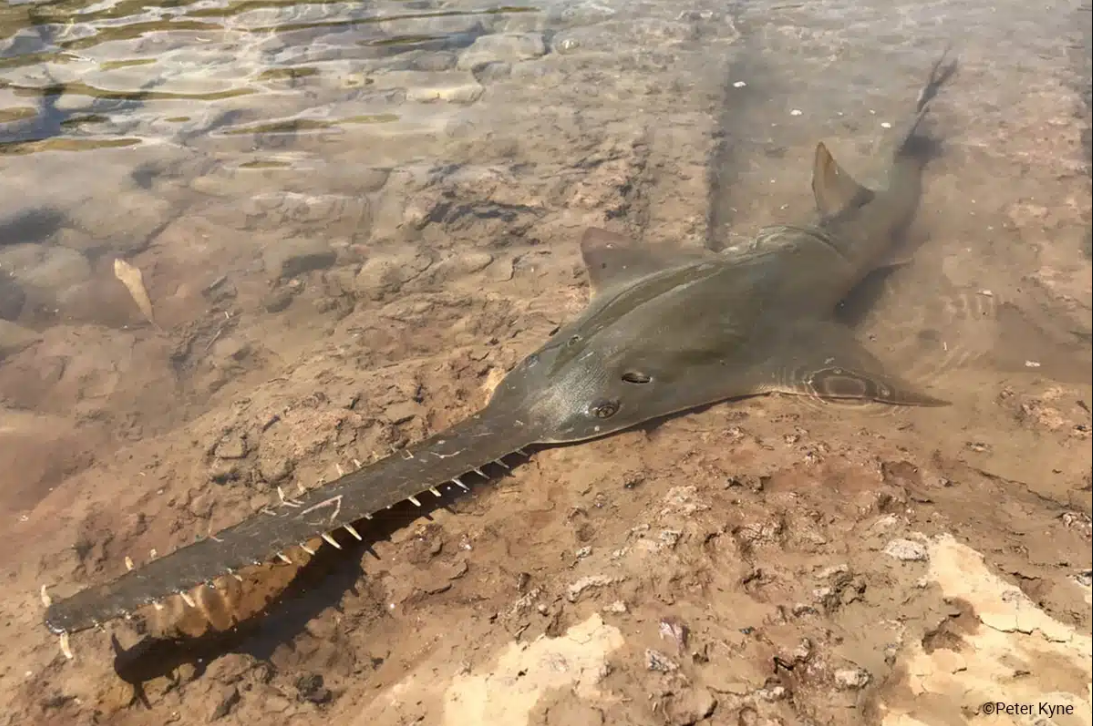
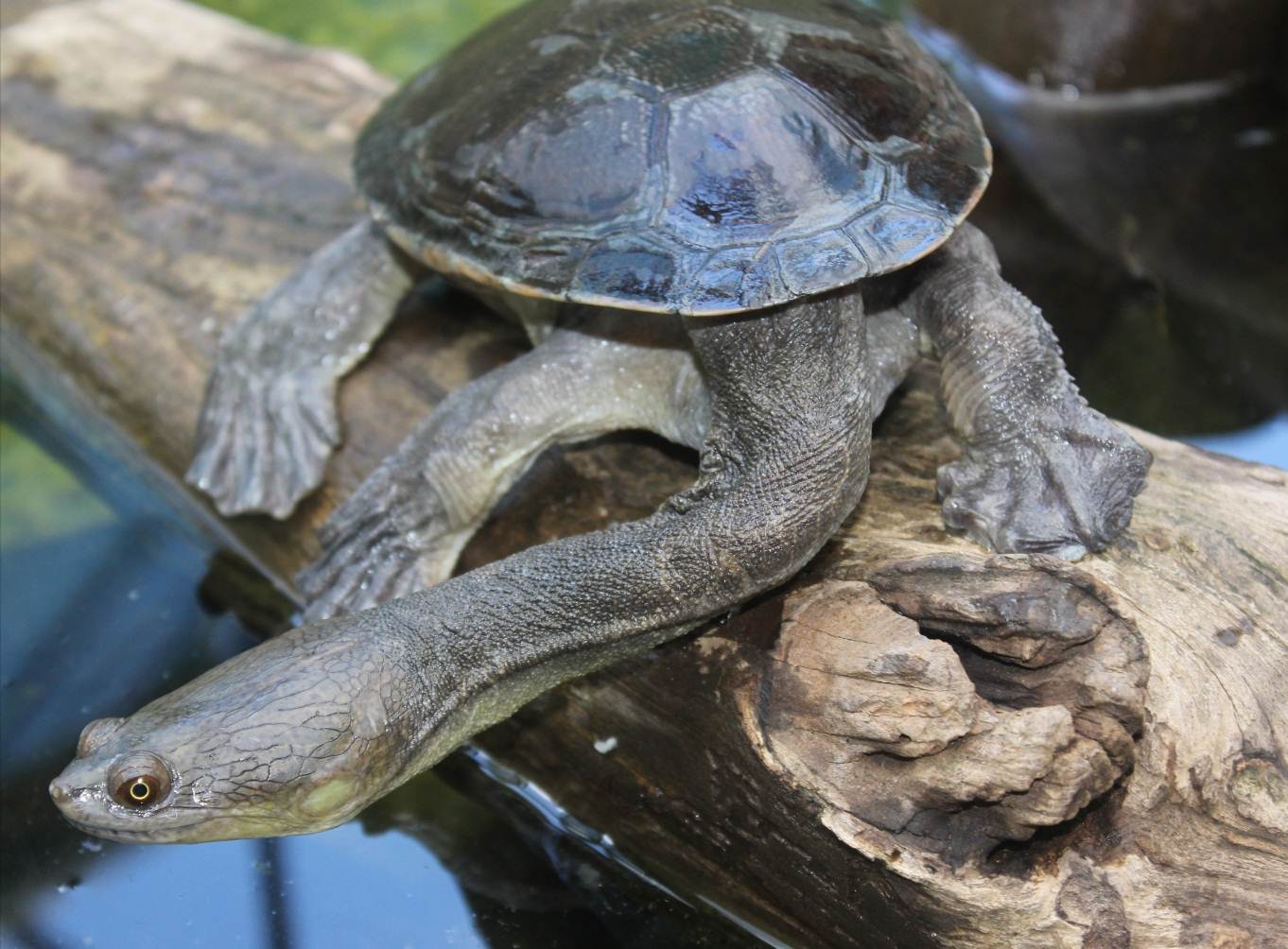
The project was supported by the jointly funded Commonwealth-State Disaster Recovery Funding Arrangements (DRFA), administered by DETSI. DLGWV were awarded $51,471 (excl GST) and TropWATER (JCU) were awarded $65,868 (excl GST) under the DRFA 2022-23 Northern and Central Queensland Monsoon and Flooding Recovery Program.
A total of eight sites were selected across the Leichhardt River (six sites), Flinders River (one site), and Norman River (one site). Samples were collected in two rounds in October 2024 during the dry season and May 2025 post-wet season. The results of the eDNA sampling detected the presence of Largetooth sawfish at one location within the Leichhardt River during the May 2025 sampling. Northern snake-necked turtle was detected at one location in Norman River during the October 2024 sampling. The sampling rounds did not detect Tilapia at any of the study sites.
This project demonstrates how eDNA can be used to identify critical habitat for key species, including critically endangered migratory species, which can be prioritised in future disaster recovery actions. This project also established a baseline dataset for the target species within the Leichhardt River which can be used to monitor changes in species distribution and presence in future disaster scenarios. Additionally, the use of eDNA in detecting pest species can contribute to early intervention to eradicate or contain pest populations, in this project no Tilapia were detected however this is applicable in other scenarios/situations to identify pest invasion or distribution.