eDNA sampling of aquatic environments across Gold Coast catchments case study
Disaster Recovery Funding Arrangements Environmental Recovery Program – Environmental Investigations Program, South Queensland Severe Storms and Rainfall, 24 December 2023 – 3 January 2024 (SQ Storms)
Severe storm events during the 2023-24 wet season across Southern Queensland caused significant environmental damage including native canopy loss, habitat fragmentation, catchment erosion, and weed intrusion.
Field-based habitat assessments and environmental DNA (eDNA) sampling technology were used across storm-affected regions to assess ecological impacts caused by the events.
The Department of the Environment, Tourism, Science, and Innovation (DETSI) partnered with the City of Gold Coast to implement a monitoring program using eDNA sampling across five major catchments to assess biodiversity impacts and identify priority sites for disaster recovery actions. The project aimed to enhance monitoring through improved detection of target species using eDNA and to strengthen environmental management through the integration of eDNA technology with traditional monitoring methods.
The project was supported by the jointly funded Commonwealth-State Disaster Recovery Funding Arrangements (DRFA) Environmental Recovery Program (ERP), administered by DETSI.
The City of Gold Coast was awarded $20,000 (excl. GST) under the DRFA ERP. This funding was complemented by in-kind contributions from the City of Gold Coast, including eDNA sampling and project management.
Sites for eDNA sampling were selected based on the degree of storm damage and ecological importance with a focus on critical habitat for locally significant and vulnerable species including the Australian lungfish (Neoceratodus forsteri), tusked frog (Adelotus brevis) and platypus (Ornithorhynchus anatinus).
eDNA sampling was conducted at 33 locations within the Gold Coast region, across five major catchments, including the Albert, Coomera, Logan, Pimpama and Broadwater catchments. A total of 3,386 unique taxa were detected across the sampling locations including 472 plants, 442 insects, 175 fish, 118 crustaceans, 43 birds, 37 mammals, six amphibians and six reptiles including 4 freshwater turtles.
Positive eDNA detections for platypus (Ornithorhynchus anatinus) were found in multiple locations throughout the study area. This result highlights the importance of eDNA in identifying elusive species that would otherwise be difficult to detect using traditional survey methods. The platypus’ reliance on healthy and clean freshwater waterways and its sensitivity to environmental disturbance make it a valuable ecological indicator species for waterway health.
The presence of platypus across the study area suggests that areas of suitable habitat persist across the region. This information is useful in guiding and prioritising the restoration, preservation, and protection of remaining habitat to ensure this iconic species is protected.
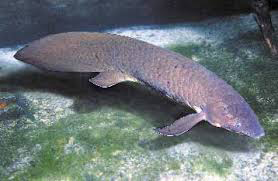
The Australian lungfish (Neoceratodus forsteri) was detected in limited locations within the study area. This prehistoric species is highly sensitive to environmental degradation, and its presence indicates relatively stable conditions. This highlights the need for disaster recovery and restoration actions to support critical habitat.
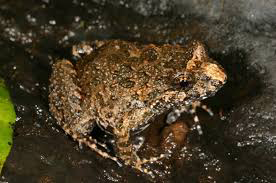
The tusked frog (Adelotus brevis) was detected in a single location across the study area. The species relies on intact riparian vegetation, moist leaf litter and slow-flowing waterways for breeding and shelter. The eDNA detection indicates the availability of this microhabitat and suggests a degree of habitat stability and resilience to recent disturbances.
This project demonstrates the value of applying eDNA technology in supporting impact assessment and disaster recovery planning for biodiversity. Integrating eDNA technology with traditional monitoring methods and waterway health data enabled the identification of priority sites for environmental recovery activities to support sensitive species and ecosystems. The project also demonstrated the capability of eDNA technology in detecting elusive and threatened species and aiding in targeted ecological restoration.