Reef Assist 2.0 (2023 – 2026)
Reef Assist 2.0 invested $18.5 million with twelve projects contracted across five of the six Reef regions.
These projects had a strong focus on providing opportunities for First Nations people and youth to increase work skills through formal and hands-on training, in addition to undertaking practical landscape repair work for healthier waterways.
Reef Assist 2.0 At a glance
- Over 240 jobs created with around 50% filled by First Nations, 30% by youth and 35% by women
- 155 participants completed over 670 training courses, achieving more than 2,200 formal accreditations
- 318,000 native plants planted, 287,000 trees propagated and 200,000 native seeds collected
- Over 120 hectares of wetlands and streambanks remediated and revegetated
- 114 hectares of gullies remediated with over 560 sediment control structures installed
- An estimated 2,722 tonnes (or 64 semi-trailers) of sediment stopped annually from reaching the Reef
Cape York region
Project: Cape York gully remediation and creation of Indigenous employment pathways
Delivery partner: Cape York NRM
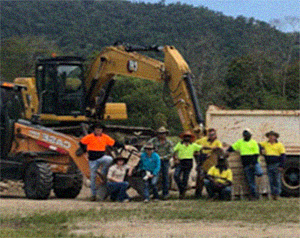
This project installed 10 large-scale erosion control structures to reduce sediment flowing into the Bloomfield River and Normanby River catchments. Participants trained in heavy machinery use and road and track construction, increasing skills, confidence and employment prospects.
Wet Tropics region
Project: Wet Tropics wetland and cane drainage water quality treatment systems
Delivery partner: Greening Australia, in partnership with Madjandji Aboriginal Corporation and Mulgrave Landcare
This project targeted the repair and revegetation of wetlands and riparian cane drainage systems in the Mulgrave catchment to deliver improved Great Barrier Reef water quality.
Project: Daintree River Wawu Dimbi riparian revegetation
Delivery partner: Jabalbina Yalanji Aboriginal Corporation
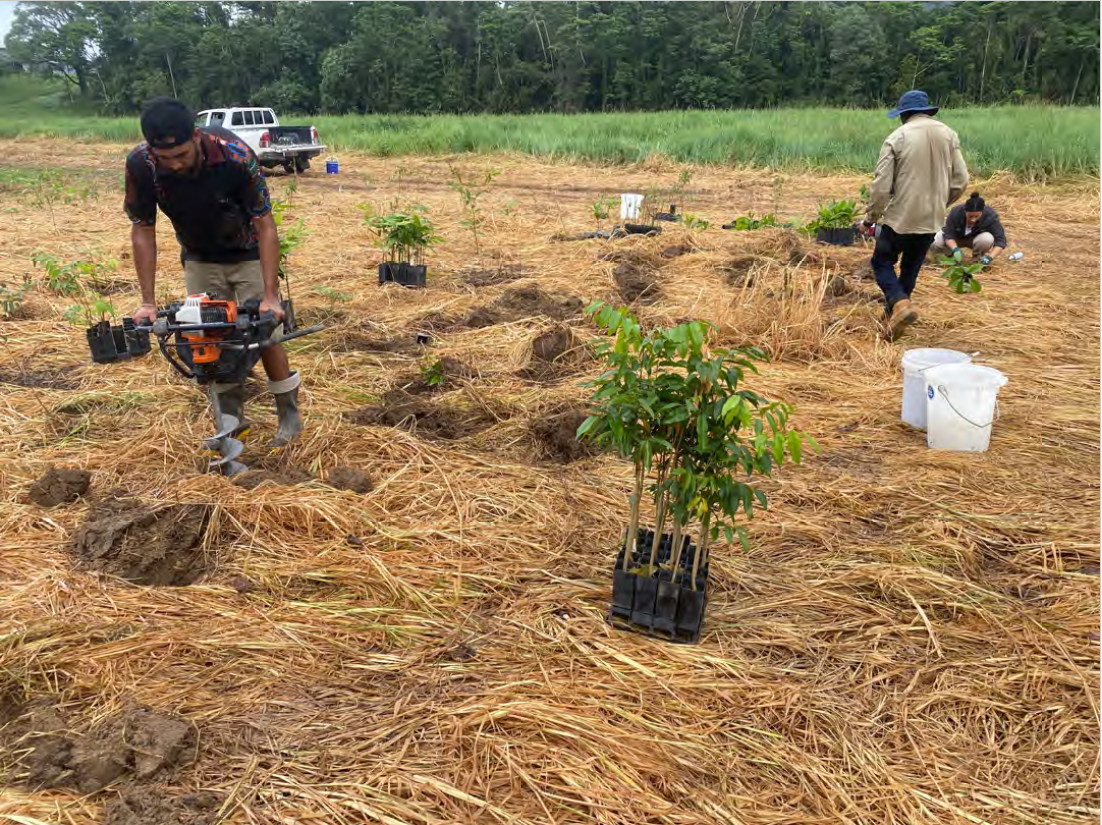
This project undertook revegetation work along the Daintree River, improving sediment filtration, strengthening the riparian buffer and creating habitat for species like the Bennet’s Tree Climbing Kangaroo, Spotted Quoll and Southern Cassowary at the culturally significant Wawu Dimbi ‘Place of Spirits’. In addition to employing First Nations people, the project engaged youth as junior rangers, improving school attendance from 5% to over 80%.
Project: Restoration of wetland function in the Russell River catchment
Delivery partner: Jaragun Ecoservices
This project revegetated natural and constructed wetlands to reduce the amount of dissolved inorganic nitrogen flowing to the Great Barrier Reef lagoon. Participants received formal training on a range of courses from maritime operations, horticulture, first aid and fire management to leadership training.
Watch a video.
Project: Cassowary Coast propagation and riparian repair project
Delivery partner: Johnstone Region Landcare Group
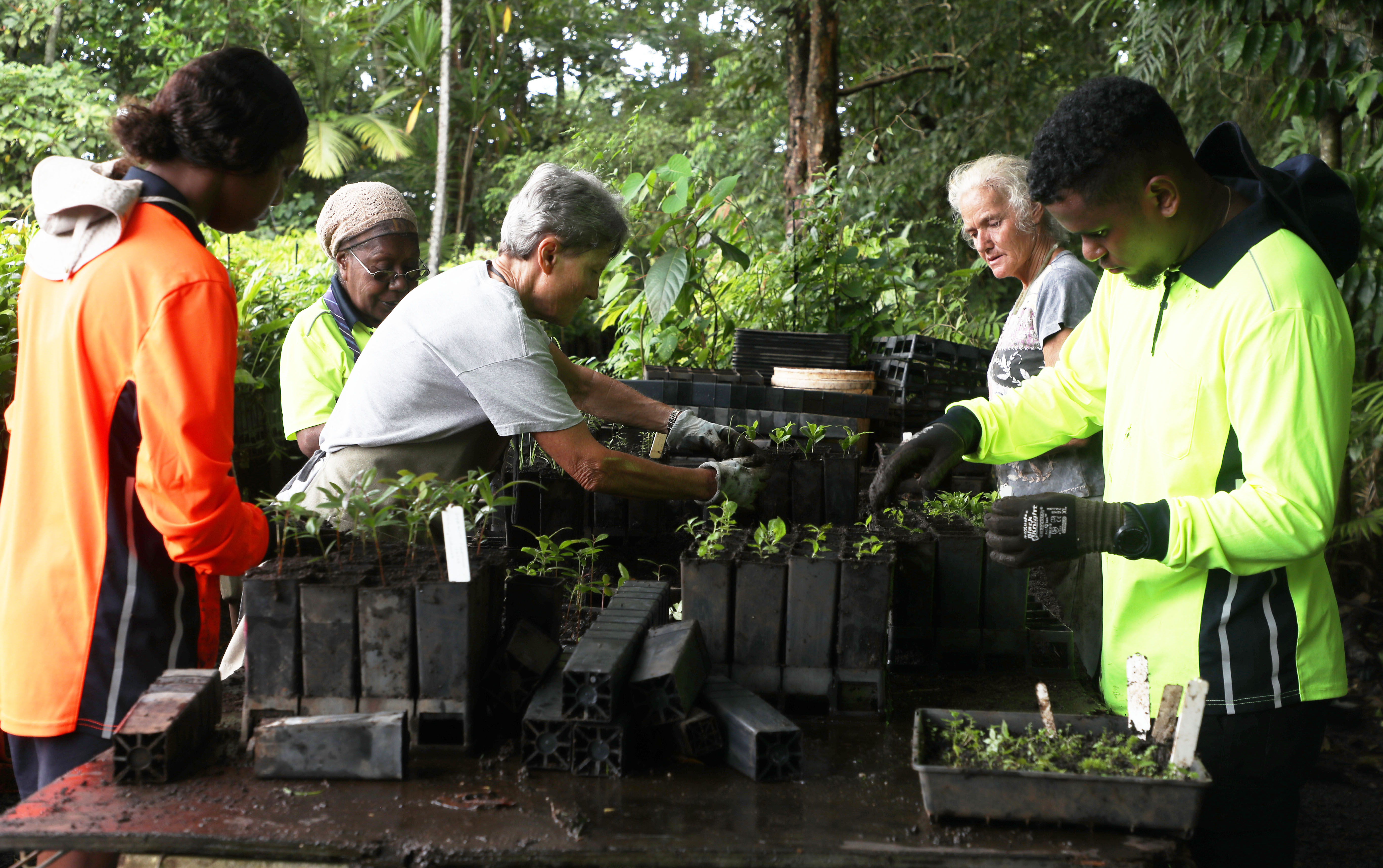
This project revegetated sites along the Johnstone River to reduce sediment and nutrient loads entering the local waterways and flowing to the Great Barrier Reef lagoon. It also extended habitat for wildlife including the endangered Southern Cassowary. Over 76,000 native trees were planted and 190,000 native trees were propagated.
Project: Atherton Tablelands riparian revegetation project (phase 1)
Delivery partner: Wet Tropics Management Authority, in partnership with NQ Land Management Services
This project built on the success of Boots on the Ground in Reef Assist 1.0 and continued revegetation work at new sites on the Atherton Tablelands. More than 38,000 native seedlings were planted, with 60,000 seeds collected and propagated.
Project: Atherton Tablelands riparian revegetation project (phase 2)
Delivery partner: Wet Tropics Management Authority, in partnership with Choorechillum Prescribed Body Corporate
This project extended phase 1 focusing on revegetating key sites identified by Ngadjon-jii Peoples and the Wet Tropics Management Authority that are contributing to poor water quality.
Burdekin region
Project: Healing Country 2.0: Burdekin water quality outcomes through Indigenous partnerships
Delivery partner: NQ Dry Tropics
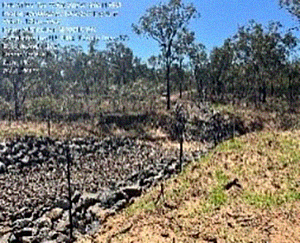
This project built on the success of a previous Reef Assist 1.0 project. Over 430 small-scale erosion control structures were installed, in addition to targeted revegetation and weed management work. As part of the project, the Birriah people also completed a Caring for Country Plan, formalising their goals for their Country.
Project: Woorabinda healing Country and gully remediation program
Delivery partner: Greening Australia, in partnership with Woorabinda Aboriginal Shire Council
This project provided training and employment opportunities in the Woorabinda Aboriginal community. Work included installing erosion control structures, revegetating streambanks and undertaking cultural heritage work.
Project: Townsville landscape regeneration through First Nations knowledge and delivery
Delivery partner: Townsville City Council in partnership with Three Big Rivers, Ausfield Services, Biodiversity Australia, Magnetic Island Community Development Association and Envite Environment
This project used innovative urban development erosion control products and techniques to prevent gully, sheet and streambank erosion in the Black-Ross basins, improving soil and land condition. In addition to the on-ground work, it also provided employment and training opportunities.
Mackay Whitsunday region
Project: Mackay Whitsunday streambank stewardship program
Delivery partner: Reef Catchments NRM in partnership with Whitsunday Catchment Landcare, Pioneer Catchment Landcare and Sarina Landcare Catchment Management Association
This project undertook riparian revegetation, bank stabilisation and gully erosion remediation work, in addition to improving the ecosystem function of Sandringham wetland. It also supported the development of a Healthy Country Plan for Koinjmal Country.
Burnett Mary region
Project: Burnett River Rubyanna riparian restoration project
Delivery partner: Burnett Mary Regional Group
This project focused on restoring riparian vegetation in degraded cane land at the Burnett River Rubyanna site.