Queensland Parks and Wildlife Service planned burns
Fire plays a crucial role in maintaining Queensland’s unique ecosystems in protected areas such as national parks and forests. Queensland Parks and Wildlife Service (QPWS) conducts strategic planned burning as part of protected area land management, helping to keep our environment healthy and reducing the risk of bushfires for nearby residents and communities.
Park alerts: Visit Park Alerts to check for QPWS planned burns happening in Queensland national parks and forests near you.
1. Introduction
Our role is one of the most diverse jobs I can think of. It’s about community safety as it is about ecology, and keeping the forest healthy, so it’s two sides of the coin.
A lot of the species are fire adapted and so they actually need the fire.
Fire management is a lot more complicated than people think.
It’s not just turning up when there’s flame on the ground.
It’s asset protection as well as conservation, it’s sort of a balance between those two things.
Newsreaders: A bushfire in Carnarvon National Park and Bandana State Forest could intensify quickly. Bushfires continue to burn. Bushfires burn across the state.
You see the smoke in the air, you see the smoke advice, you see the news when bushfires are impacting us, but what you don’t see is the work behind the scenes.
We’re all working in our own patches while all working together across the State to try to mitigate as much risk going into bushfire season as we can, by working with the weather and conducting hundreds of planned burns each year.
2. Planning
Before we can even get planning, we all need appropriate training.
So there's a lot of different trainings Rangers will do to come on a burn.
For me to be here today.
I've done aims training which means I can be a responder to wildfires and be on the fire ground.
So today's a learning exercise for me, I haven't actually been on a plane burn before.
Usually I've responded to wildfires for wildlife, so few different avenues there to get on fires, but you learn most by being here and learning under the guidance of the older Rangers that have done a lot of this.
I've been the fire trained as a crew member for just over 10 years now and I've done a crew member and incident controller training, and in a couple of weeks I'm going away to do as aerial incendiary supervisor specific course.
I have a medium rigid licence, I'm actually being inducted to drive this truck.
I tend to take it out the fires while the other guys are take the light attacks out.
The training pathway for aircrew for aerial incendiary operations and my training path was as a Bombardier aerial incendiary operator and for that we went through our formal qualifications and that therefore qualifies me to be able to use this machine.
Each burn has its own incident action plan with unique considerations, its own community effects and others we work with, which can include our First Nations partners, the Queensland Fire Department and neighbouring landholders to ensure the best outcomes.
With fire, it's a pretty fickle game and we're always looking for a burn window and opportunity where the conditions are right.
We do have planning months and years in advanced, however we take advantage of our window of opportunity.
Once we do have our priority burns and then we have the ideal conditions, we make sure we've got our notifications, park alerts, VMS signs out for the public so that they're aware of smoke hazards, letterbox drops for our local areas, neighbouring and there's sufficient evidence and notification that they're aware of a plan burn happening in that area.
With the smoke hazards you have, the schools, you might have others with respiratory issues when it comes to our temperature, our wind speed, our humidity, all that plays an important part in our our planning and operations on the ground.
Once burn priorities are set, burn plans are made and we can look to test burn if the weather is right.
So we're doing a test burn, it's in preparation for our plan burn that we've got coming up hopefully shortly in the next couple of weeks.
So what we've done today is we've picked two of our test burn sites, both in differing vegetation and then we've recorded the fire activity from those two areas.
So we use a little device called a Kestrel and from that we gather readings from the current humidity, wind, temperature and wind gusts as well.
So all of those things are relevant to when we need to do actual fire and we can reflect on that data.
So you're doing this pre-fire cheques so that when you go out you know you're going to get fire on the ground that will travel.
3. Prepping
Even before we think about fire on the ground, there can be 3,6,9,12,18 months worth of work.
Today we've been notifying all our neighbours so that they're aware that we're burning and can potentially do some prep work on their own properties if they want to, such as clearing out gutters, making sure there's nothing up against their back fences.
We've also been raking around any habitat, trees or anything with hollows so we're not interfering with any like nesting birds or anything like that. Raking around signs, fences, taking fuel, moisture readings.
What we usually do is we we flag any trees of significance, so stringy barks, things that want to pop up. Hollows are a big thing.
We have a lot of endangered animals in here like greater gliders, so we'll rake a big circle basically around the trees to protect it so the fire can't creep up.
It can be multiple days in a row as well, depending on the size of the park we're working on.
Once we've prepped the parks, we have to make sure we and our vehicles are prepped with the gear we need.
Yeah, so this is our light attack vehicle.
So inside the cab here we have our radios, we have a VHF and a UHF for columns, obviously in the car.
And then we've also got handheld ones as well if we're leaving the vehicle to do any fire operations, we've got our safety blankets up the top. We can deploy them if if needed.
Down here we've got the water tank, it's 600 litres, that's what they carry.
We've got our shovels and Rakehoes.
They're really good for making control lines and and things like that.
In the cab here, this is where we store all our gear.
So you have your fire bag, your deployment bag will go in there, first aid kit, recovery kits.
At the back here we've got our hose reel, hand wash.
Obviously it gets real dirty when you're working on fire, so hand wash spot there and then, our hose reel here, which has about 40 metres of hose on it. In the back here we keep our drip torches, our lay flat hoses and some spare nozzles and and hose fittings if we need to use them.
And the lay flat hose is obvious to extend our our normal hose if we need to keep keep rolling hose out.
Our drip torch fuels at the back behind there.
And we've also got our suction hose when we need to draught water from a water source, we just pop this down, throw the hose straight into the water source and you can draught and fill up your tank. Controls for your tank runs off a a diesel pump that's just behind this wall just here.
And then inside here is another kind of a storage area, we keep a lot of gear, knapsacks, chainsaw, chaps, helmets, a lot of our safety gear, tool kit, leaf blower and chainsaw and, and fuel and bar oil on on a slide as well.
Another Rakehoe for the other crew member and a hydrant fill point if we need to fill up real quick and if we've got a stand pipe set up, we'll we'll definitely use that.
And that's about it for the light attack unit.
In the past we've actually had to rely on Rural Fire Brigades for a medium attack support vehicle, but now there's three of these cars, 4 wheel drive, low range truck and they proved to be quite handy.
Then we've also got our full PPE kits as well, so that includes our fire gear, we've got gloves, helmets, boots, all Australian fire rated gear.
Igniting fires from the helicopter, the machine will drop a little capsule out through the tube and that will land on the ground where ignition happens once it lands to the ground, so it will fire.
So this machine, we're lucky enough to have this manufactured right here in Australia. And for this machine we've got a little box of capsules there. They feed through the machine at the speed that we desire.
It might drop the incendiaries at 300 metres apart or it might drop them at 10 or 20 metres apart, depends on what the objective of burn is. So that comes through the machine, they're injected with a catalyst and then they come out through the chute and, and onto the ground.
When we initially fly over the fireground, we're looking at the ground fuels to have a bit of an idea of how the burning might go.
If the fuels look fairly sparse, then we might need to put some more capsules into it if the fuel looks fairly dense, and we might put less into as well.
And for all of that, we consider curing of the vegetation as well, how dry it is, how wet it is, what the recent rainfall has been in all those conditions as well.
There's a lot of really important information we get from from the briefing, so the incident controller will obviously give us I guess the mission for the day. So ours was obviously the plan burn and for us to target the ridge tops.
How many crews are on the ground where they're going to be located as well?
Safety is always number one for us on the on the ground.
And then from there, we, we started looking at, I guess the weather, the wind, how we're going to operate today.
So once they've done their briefing, Dave then stepped in and did a bit of a briefing what we're doing and just reminding crews about, you know, there's an aircraft in the air.
Be wary of, you know, if we're coming in low like rotor wash and things like that.
I guess the main things are the safety side of things on the fireground in, in your briefings, that's what you really want and what the mission is for the day, the job that we're trying to do.
Once briefings are done on the day, the teams are ready to enact on our incident action plans and get the burn started.
4. Burning
So we're conducting a planned hazard reduction burn today.
We've got three crews, which is a total of 6 people, plus a couple of support crew on site today.
Plus we've also got some council contractors that are burning, the council stayed on the outside of the National Park.
So for me, I'll be a sector leader, so basically that means that I'll be in charge of a crew member and we'll be patrolling the line.
Depending on the time of day that'll include actually ignition of the fire, but also maintaining control of that fire that we've just put on the ground and then mopping up activities as well.
We've covered about 22 hectares of land, at the moment we're taking advantage of the kind of day, the temperature, the wind, the humidity and it's given us ideal conditions to have really nice slow burning fire at the moment rate it spread about 30 metres an hour, flame heights for about half a metre.
So all of that with the some of the, the geographical location that we're in makes for a nice backing fire, nice and safe, very cool
so it doesn't really burn our larger stags and it also gives an opportunity for our wildlife to escape some of those areas too.
So we're really focusing on so many different layers there, cultural, natural to make for a really great collaborative fire.
Some plan burns are big enough that we can use aerial incendiary techniques.
I'll be aerial incendiary supervisor, so sort of front seat navigator.
So I'll be working with the pilot and the Bombardier.
In terms of when we'll be burning and what fight pass we'll be following.
This one is actually probably about five years in the making.
So we've had our briefing and we've all agreed on the area that we need to commence our operations in today.
And we've discussed any challenges or hazards that might be around that fireground and how we where we intend to commence the operation and where we intend to to finish the operation as well.
But sometimes we come and do an area run quite early in the season, we might take out fuels along the ridges, which on the drier higher ridges that are more exposed to the wind and the sun, particularly the north facing slopes,
we'll take those fuels out first and then we'll come back maybe a couple of weeks or even months later, and we'll burn further down the slope and into the galleys, maybe when it's drier in the season and
that stops an uphill run up to scorch the vegetation up high on the Ridge and just breaks the the fire down it'll burn into a fire scar from previously.
As our incendiary start to burn and spread, you limit that running fire, as the fire's coming up, we'll just keep hitting you, your fire in front.
So that's our big aim today and luckily the last few days the ground crews have been doing an amazing job and and they actually secured a lot of the edges.
There's a lot of really good things as to why they're important.
The one thing is obviously taking out the fuel loads.
So if we did unfortunately get, you know, a lightning strike or, or something like that and we had a, a larger fire run through here, we're protecting obviously the community and it's really good for the vegetation types and things as well, if we can create mosaic burning.
So I guess our aim is as we light the, the top part of the ridge, the fires just going to back down and then once it reaches the, the shaded areas and the creek lines and that'll, it'll start to die down and go out.
As we're coming back around, we're actually watching the fire behaviour.
So I'll take time to look at that.
But yeah, there is a lot happening with the the communications, watching the machine, watching what's going on.
Once we're up in the aircraft, we're all part of what they call the aircrew.
So we all have a role as well to help the pilot.
So we're always looking and any anything that we see we'll just point out straight away.
For the first few days we've been burning around the perimeters and getting a safe edge and today we we got up in the helicopter and did aerial incendiary runs through the internals.
Today was a really good success, we managed to get a lot of incendiaries to take but the fire behaviour was exactly what we wanted.
We're really happy with how it all ran today.
For these burns, it really helps mitigate the the fuel types that are on the ground, so that fuel hazard.
So here on the Gold Coast, it's pretty much the only sort of little bit of coastal heath that we've got left.
So it's about 112 hectares.
So it really protects that that last little remnant of that vegetation type.
It also protects a lot of different animals and things that you won't otherwise find in the middle of suburbia anymore, things like echidnas, koalas, lots of different wildlife as well.
Typically we don't aim for a full scorch, we would like to only just burn the top layer of fuel to reduce the fuel load and to leave the nutrients in the soil beneath. So that encourages the recruitment of the next generation of species.
On the burn day, I'd like to try and over resource so that we've got about 6 fire units on the ground.
We'll rough it in with two sectors like Alpha and your November and we'll be working in together as they conduct their ignition.
So we have the ignition on the drip torch ignition crew and then your backup mop up crew will be following behind them.
Make sure everything's fine with the rate of spread, the conditions on the ground.
The flame heights haven't gone absolutely crazy, but they're there with the hoses and they'll be rakehoeing around any trees that are going to be causing any issues down the road, especially when it comes into our night time because we're going to be burning so late in the evening.
So as you can see behind me, we're still getting quite active fire behaviour despite it being after 6:00 at night, so it just helps us control that fire behaviour more.
We are quite close to houses that we don't want as many embers going across to where the houses are.
Obviously it's a little bit harder to see where you're walking in the dark.
You've got to make sure you've got your light on, but it does make it a little bit easier to see any logs or any trees that are on fire.
We would hope to have it wrapped up within the day if the burn conditions are right, and then we'll continue for the rest of the shift to do mop up so to make sure that we've got the fires all contained and that there's no risk of it reigniting.
5. Evaluating
Post fire, we'll do a post burn evaluation.
So typically what we'll do is we'll come back and do a walkthrough.
We'll assess for any hazardous trees or just general hazards to members of the public as well as any effects on the habitats.
But also we do annual health cheques, so we'll still continue to do those after a burn.
And we'll pick up on recruitment of the canopy species, general weed activity after a burn as well.
So we do try to keep a close eye in those couple of months after the fire has gone through.
So doing these these assessments, we really get engaged on those lessons learnt.
So doing those cheques can really help out with future planning.
I think we're heading in a really good direction on our policies, our procedures, our management plans, ongoing our assessments and those evaluations moving forward.
So they really help negate the next plan and then moving forward for everyone else that is involved on those days.
It is fire, but the way that we manage it in a department like Queensland Parks, we use it as a tool and it's one of the greatest tools that we can have in such large areas.
Fire's role in maintaining Queensland’s unique ecosystems
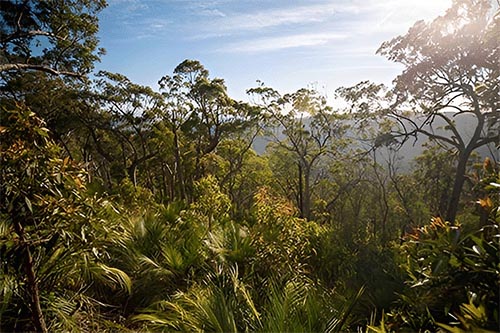
Keeping our ecosystems healthy and biodiverse
Fire helps to conserve biodiversity and ecological processes across the landscape, protect fire-sensitive communities and species, and manage weeds and pest animals.
Supporting species conservation
Healthy and well-maintained ecosystems contribute significantly to conserving a range of species and their habitats. Without planned burning, habitats for native species can be lost.
Protecting communities by reducing bushfire risk
Planned burns reduce the build up of flammable vegetation (or fuel loads) in national parks and forests, helping to minimise the risk and intensity of bushfires.
About planned burns
Understanding planned burns
Queensland Parks and Wildlife Service (QPWS) works year-round, planning, implementing and monitoring fire management activities across the state.
The benefits of fire
Learn more about the evolution and benefits of fire for land management, including about flora and fauna, science and technology and Indigenous fire practices.
Photo: Greater Glider © Queensland Museum, Gary Cranitch
QPWS’ role and our partners
QPWS is the largest land manager in Queensland, with protected areas such as national parks and forests covering over 13 million hectares. Learn about our role in fire management and bushfires.
I am planning to visit a park or campground
Before you visit
Whether you are planning a visit to a park or campsite, there are a few things you can do to be prepared and stay safe.
I live near a park or campground
Be aware and prepared
If you live near a national park or forest, be aware and prepared to protect yourself and your property.
- Learn what you can do
- Check Park Alerts and monitor conditions
- Understand bushfire safety from the Queensland Fire Department
- Learn about how QPWS works with park neighbours and read the Good Neighbour Policy
Smoke from planned burns
Resources and information
If there is a planned burn in an area, smoke may be seen. What you should know and do:
- Avoid driving through smoke where possible, be aware of any fire operations nearby and know how to monitor conditions.
- If smoke affects you: stay indoors, close windows and doors and keep respiratory medication close by.
- For current conditions and QPWS fire activities, check Park Alerts
- Check smoke sensors and air quality data in your area
- Check current fire warnings and incidents
- Find your local government disaster dashboard
Socials
Blog and case studies
How a Chinchilla bushfire was contained
When a bushfire impacted Nudley State Forest, east of Chinchilla, Rangers were quick to respond and the bushfire was contained in just over a week.
All hands on deck for Magnetic Island
When we talk about lifelong partnerships, there are few that embody that more than the ongoing relationship between Queensland Parks and Wildlife Service (QPWS) and the Rural Fire Service Queensland (RFSQ).
What are planned burns? Your FAQ explainer on this essential fire management tool
Learn about the science behind planned burns, as well as how they help protect the changing Queensland landscape.
Read more blogs and case studies to learn about fire management and planned burning in Queensland’s national parks and forests