Salvos Stores Textile Recovery Facility
The Queensland Government has partnered with Salvos Stores to establish Australia’s first automated Textile Recovery Facility to address the growing environmental challenges posed by fast fashion and textile waste.
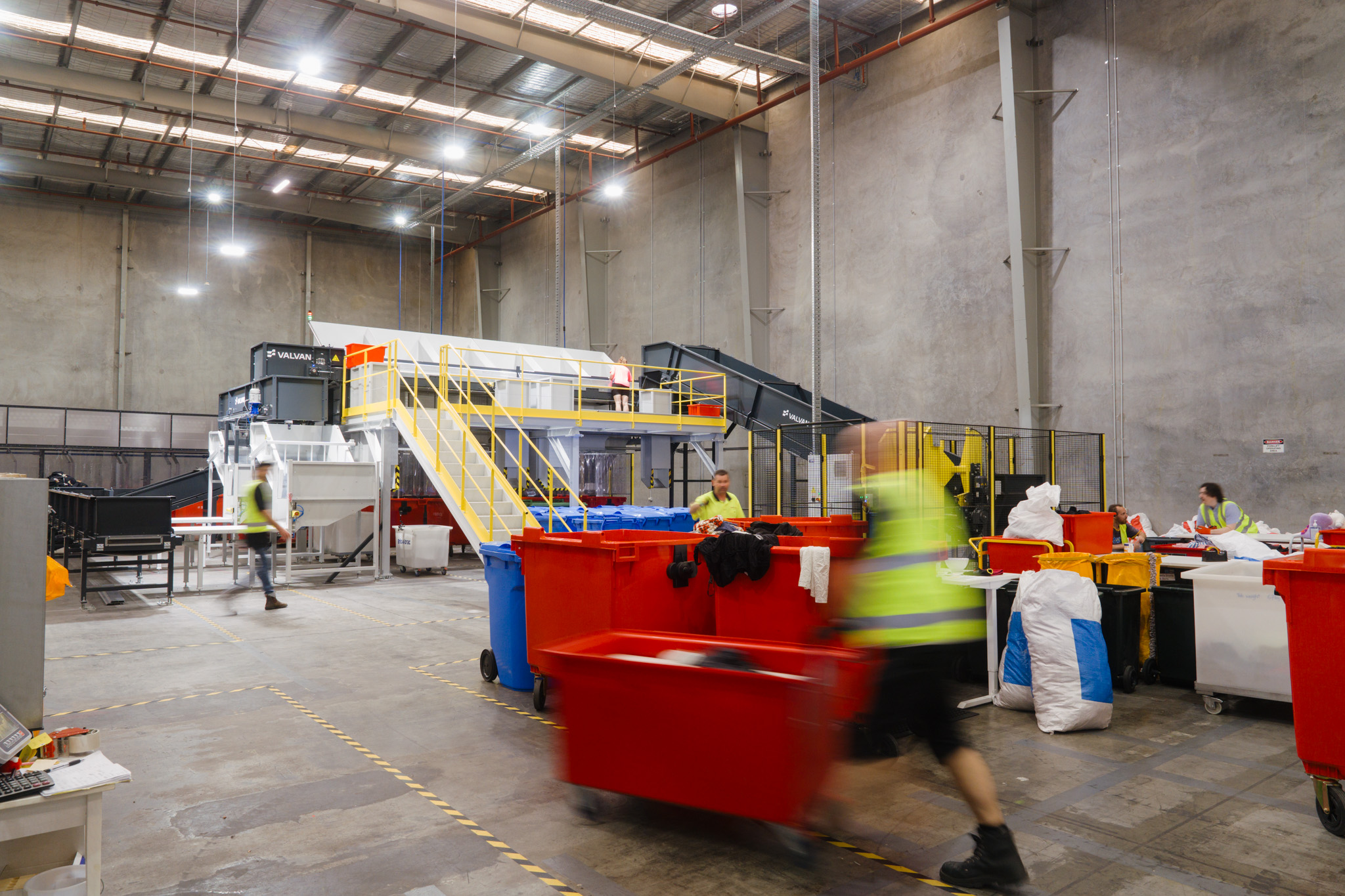
The Ipswich facility can process up to 5,000 tonnes of textiles each year for reuse and recycling to help divert textile waste from going to landfill.
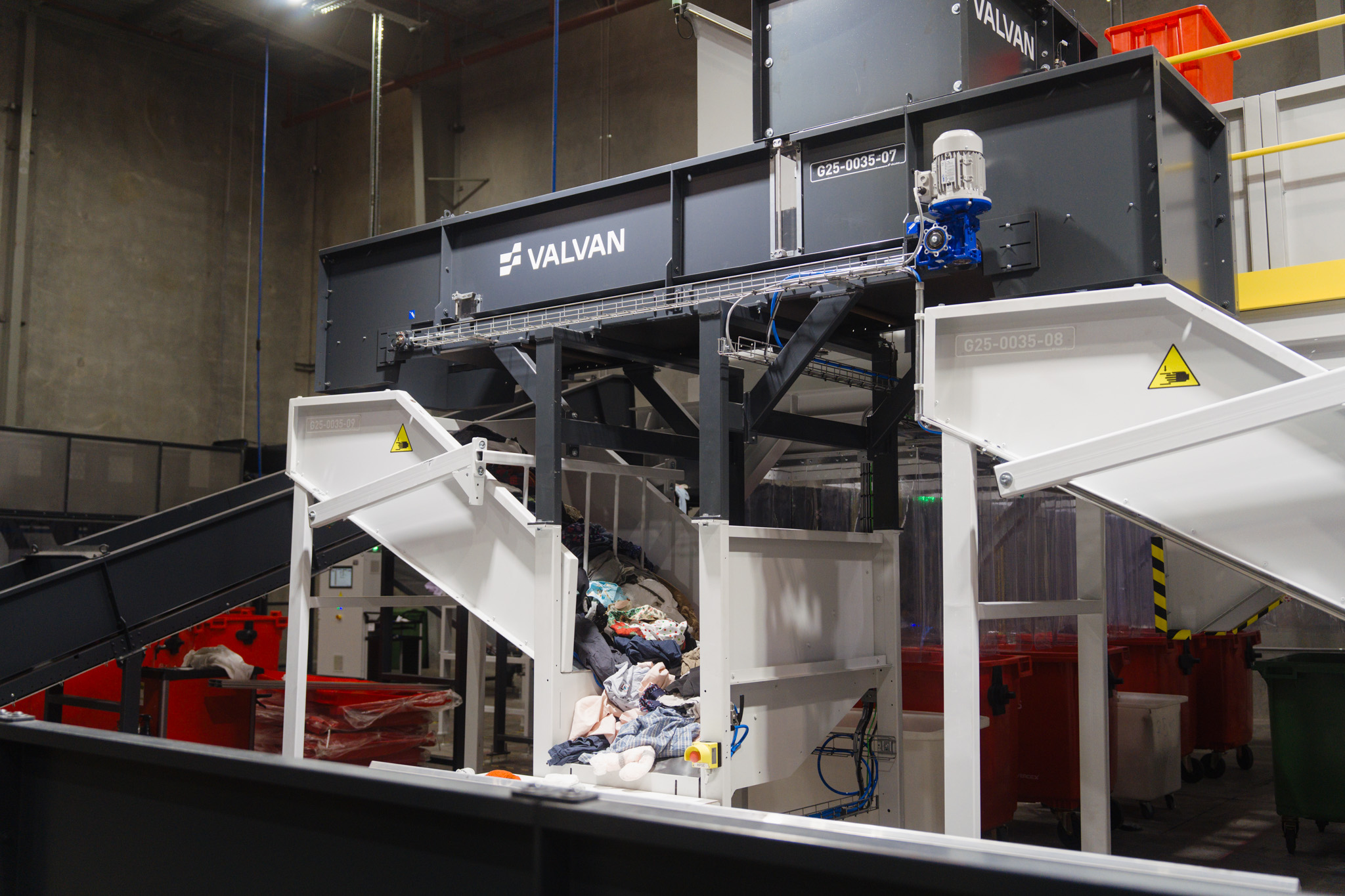
The Salvos Stores Textile Recovery Facility uses advanced Artificial Intelligence (AI) and robotics to sort and decontaminate textiles on a large scale– sorting textiles into material types and removing buttons and zippers.
This innovative approach ensures more wearable items go to Salvos Stores for resale while unusable textiles are recovered and processed for recycling, ready to be remade into new products.
The importance of tackling textile waste
Each year 200,000 tonnes of clothing goes to Australian landfills. Not only is this clothing wasted, but some synthetic fibres like polyester can take hundreds of years to decompose.
But recycling textiles is no easy task. Clothes often contain a mix of fibres, dyes and finishes like zippers, buttons or labels – that can be difficult and costly to separate. This complexity makes it challenging to recycle textiles effectively on a large scale.
Tackling textile waste in Queensland
Reducing textile waste requires both improved recycling systems and a strong market for products made from recovered materials.
While there are some existing textile recycling options in Queensland, the infrastructure is still limited, leaving much room for improvement.
By investing in critical infrastructure and innovative solutions, the Queensland Government is addressing the challenges of textile waste head-on and building a more sustainable future for Queensland that delivers long-term environmental, economic and social benefits for our state.
Driving innovation to establish strong end markets
The $4.97 million investment into the Salvos Stores Textile Recovery Facility helps enable innovative partnerships and supply chains that transform recovered textiles into valuable products, such as acoustic panelling, insulation, yarn, homewares, and even new clothing.
By fostering these solutions, it positions Queensland as a leader in sustainable waste management and creates new opportunities for industries and businesses to integrate circular economy principles.
Strengthening community
Investing in initiatives, such as the Salvos Stores Textile Recovery Facility, plays a crucial role in supporting the charity reuse sector to continue their vital role in reducing textile waste, strengthening communities, and promoting sustainability.
Not only are charities crucial in giving discarded items a second chance; but they also gather valuable data that enables a deeper understanding of textile disposal to inform smarter waste management practices.