Crocodile egg harvesting
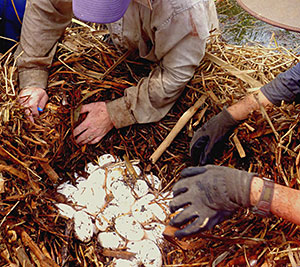
The Nature Conservation (Estuarine Crocodile) Conservation Plan 2018 includes provisions to authorise an individual or corporation to harvest estuarine crocodile eggs under a harvesting licence, however strict limitations and requirements are in place, including that:
- a licence application must be supported by a harvesting proposal and a report of research, conducted by an appropriately qualified person, about the state of the local crocodile population
- the harvest must not adversely affect the local crocodile population
- any eggs harvested must only be harvested and transported in accordance with the Australian Government Code of Practice on the Humane Treatment of Wild and Farmed Australian Crocodiles
- comprehensive crocodile population monitoring will occur in all areas where egg harvesting occurs.
Conservation of crocodile populations is a complex challenge. In areas where harvesting is authorised, the potential commercial gains for egg harvesters may provide incentives for enhanced land stewardship. Managing land in a way that conserves crocodiles, and encourages crocodile nesting, may have broader benefits for land management and conservation, for example through improved control of feral animals.
Being able to harvest crocodile eggs in Queensland may also have positive social impacts for some rural communities. Crocodile egg harvesting is a potential employment opportunity for small or isolated regional communities where jobs can often be scarce. With many Indigenous communities in these areas, egg harvesting could also offer people ways to work on country and to play a greater role in land management and care.
Egg harvesting within Queensland also provides Queensland’s crocodile farmers the opportunity to access and grow more crocodiles without relying on the limited breeding capacity of farmed adult crocodiles or having to source eggs or hatchlings from interstate.
Egg harvesting in Queensland is supported by the Wildlife Trade Management Plan – Queensland Crocodile Farming and Crocodile Egg Harvesting (2023–2028) approved by the Commonwealth Minister for the Environment and Water. The Wildlife Trade Management Plan provides for relevant persons or corporations to apply for an export permit for any crocodile skins or other crocodile products that have come from harvested eggs.
Comprehensive monitoring is required for areas where egg harvesting is authorised, to ensure that there are no detrimental impacts to local crocodile populations and to ensure the harvesting is sustainable. The requirements will include annual crocodile population monitoring for all waterways where egg harvesting occurs, and ongoing nest monitoring to track any potential changes to the nesting activity of local crocodile populations.
For more information, see the following:
- Application form – Harvesting licence (estuarine crocodile eggs)
- Guideline – Estuarine crocodile nest and egg monitoring 69.9 KB)
- Form (Record book and Return of Operations) – Harvesting licence – estuarine crocodile eggs
- Wildlife Trade Management Plan
- Conservation and management of estuarine crocodiles
- Code of practice on the humane treatment of wild and farmed Australian crocodiles
- Nature Conservation Act 1992
- Nature Conservation (Estuarine Crocodile) Conservation Plan 2018
- Review of a Trial Harvest of Estuarine Crocodile Eggs in the Pormpuraaw Deed of Grant in Trust Lands and Recommendations as to an Experimental Commercial Harvest by Dr Laurence Taplin 3.1 MB)