Ambulance ramping dips to a six-year low
Ambulance ramping has fallen to its lowest quarterly rate since the COVID era as the Queensland Government continues delivering health services when you need them.
New Queensland Health data reveals ramping across the State dropped to 35.5 per cent in the June quarter.
By delivering critical health infrastructure and new specialist mental health nurses, Queenslanders have easier access to more free healthcare than ever before.
As part of the Hospital Rescue Plan Redland Hospital’s new Transit Care Hub has doubled in size, increasing beds from 12 to 19, giving it the capacity to care for more 7,000 patients each year.
The upgraded space will operate 24 hours a day, seven days a week, and includes a dedicated minor procedure room and improved patient amenities.
The expansion is designed to improve patient flow by caring for people who are ready to leave an inpatient bed but still need short-term support, observation or discharge planning. That helps free up beds for emergency and acute patients sooner making a real difference to patient flow.
New quarterly data shows ambulance ramping at Redland Hospital fell from 65.5 per cent in the June 2025 quarter to 56.2 per cent in the June 2026 quarter, a drop of 9.3 percentage points.
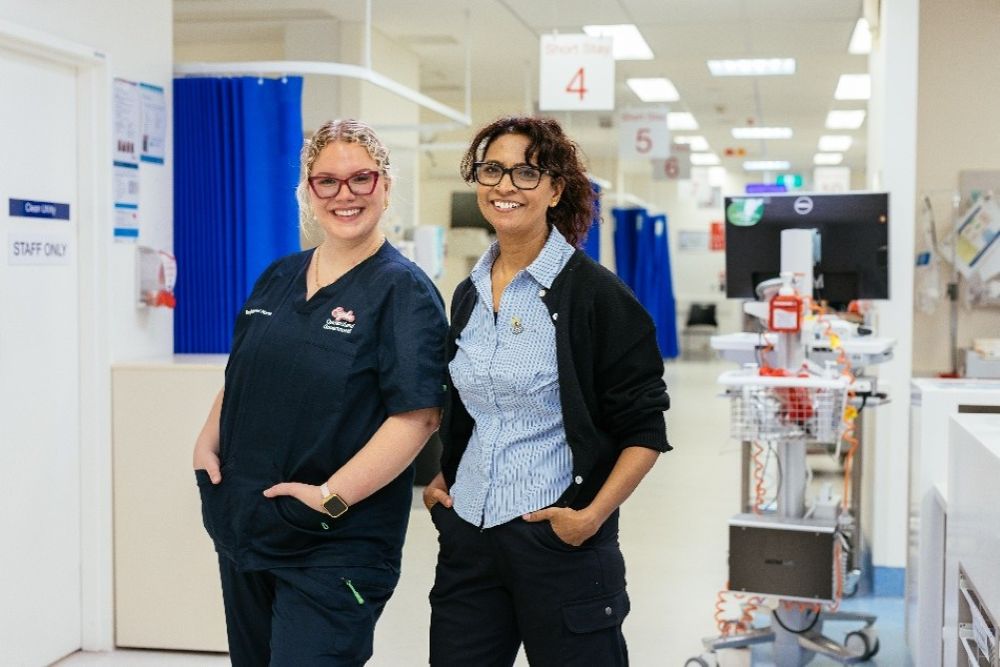 Nurse Sophie Mullaly and clinician Preety Game-Mtengezanwa work together in Redland Hospital’s new Transit Care Hub
While the expanded Transit Care Hub is helping free up beds, specialist mental health nurses are also improving patient flow at the front end of emergency care.
Redland, Redcliffe and Hervey Bay are among the first hospitals in Queensland to recruit specialist emergency department mental health nurses, part of a statewide rollout of 53 new roles aimed at improving care for people presenting with mental health concerns.
The new nursing roles are part of a broader increase in frontline health staff across Queensland’s public hospitals and health services since November 2024, with specialist positions like these designed to support faster assessment and more coordinated care in busy emergency departments.
At Redland Hospital, emergency mental health parallel care clinician Preety Game-Mtengezanwa works alongside ED staff and clinicians to make sure mental and physical health needs are considered together.
“Every day is different depending on how many presentations we get,” she said.
“The whole idea is to work alongside the ED staff, so the medical and mental health models are working in tandem,” she said.
Preety said the role helps clinicians quickly build a clearer picture of a patient’s needs and connect them with the right care and follow-up support.
“This role helps gather information and start to formulate a treatment plan. We figure out how we can support someone and determine what follow-up support plan and services they need in the community,” she said.
By supporting earlier assessment and care planning, specialist mental health nurses can help reduce delays in the emergency department and improve the flow of patients through hospital.
Together with the expanded Transit Care Hub, these roles are helping Redland Hospital improve access to care and ease pressure on emergency services that drive down ambulance ramping wait times.
Redland Hospital expansion | Metro South Health
- Last updated:
- 31 August 2026