Clearing of protected plants
On this page
Protecting Queensland’s native plants
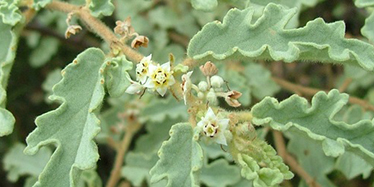
The Nature Conservation Act 1992 (the Act) regulates the clearing of native plants in Queensland to protect our threatened and near threatened plants for current and future generations.
Protected plants include a range of native plant species protected under Queensland legislation. Some protected plants are classified as critically endangered, endangered, vulnerable or near threatened and are subject to additional clearing requirements.
The regulatory requirements for clearing of protected plants and the list of threatened or near threatened plants are contained in the Nature Conservation (Plants) Regulation 2020 (the Regulations).
What native plants can I clear?
Clearing means taking (e.g. removing or destroying) plants from where they are growing.
If you want to clear native plants that are not ‘in the wild’ (e.g. in a garden), the clearing requirements under the Act do not apply. Read the operational policy for more information to help you understand if a native plant is ‘in the wild’.
If you want to clear native plants ‘in the wild’ (e.g. in bushland), you will need to work out which clearing requirements under the Act you need to comply with. The requirements may include obtaining a flora survey and/or a protected plant clearing permit, and will apply even if an area is Category X under the Vegetation Management Act 1999 (the Vegetation Act).
The following information will help you assess the clearing requirements that apply to your circumstance and apply for a permit, if required.
Find out more about vegetation management.
What clearing can be undertaken without a flora survey or permit?
Many clearing activities are ‘exempt’, which means that native plants that are ‘in the wild’ can be cleared without the need for a flora survey or a protected plant clearing permit, or notifying the department. The general exemptions include:
- use of native plants for authorised grazing
- clearing to avoid or reduce risk of death, injury or serious damage to buildings or property
- clearing for firebreaks
- clearing to manage encroachment or manage weeds in accordance with a vegetation clearing code under the Vegetation Act
- clearing for routine maintenance of infrastructure (such as buildings, roads, stockyards, fences and vehicular tracks)
- re-clearing (for up to 10 years) of an area that was lawfully cleared under the Act.
The General Exemptions Information Sheet (PDF, 216KB) will help you work out whether a general exemption applies to your proposed clearing.
An exemption also applies for clearing land outside of a high risk area on the flora survey trigger map. Note: if you are aware, or become aware, of any threatened or near threatened plants you cannot clear the plants or within 100m of the plants unless you obtain a protected plant clearing permit.
The flora survey trigger map identifies high-risk areas for threatened or near threatened plants. That means one of these plants has been found in the area or that it contains habitat that indicates that one or more threatened or near threatened plants are likely to be present.
When clearing outside a high risk area, you need to obtain a copy of the flora survey trigger map for that area and then keep five years from the day the clearing starts. You will also have to conduct the clearing within 12 months of obtaining the copy of the map. These requirements may be different for projects that have undergone an environmental impact statement process.
What if the plants I want to clear are within a mapped high risk area?
If the native plants you propose to clear are ‘in the wild’ and none of the above exemptions apply, you will need to have a suitably qualified person undertake a flora survey of the clearing impact area and to prepare a flora survey report. A suitably qualified person is typically an ecological or botanist who meets the qualifications, experience and skills set out in the flora survey guideline (PDF, 536KB).
The flora survey needs to be consistent with the flora survey guideline (PDF, 536KB) (or an alternative survey methodology agreed to by the chief executive) and must look for all threatened or near threatened plants that may occur in the clearing impact area. The clearing impact area is the area to be cleared and typically a 100m buffer around that area.
The results of the flora survey will determine if a clearing permit is required.
How do I find a suitably qualified person to undertake a flora survey?
In accordance with the flora survey guidelines (PDF, 536KB), a flora survey must be coordinated and led by a suitably qualified person. A suitably qualified person may refer to themselves as a botanist, ecologist, or environmental scientist and will have qualifications or training in native plant identification and conducting flora surveys, as well as extensive experience in conducting flora surveys.
There are several ways you may find a botanist, ecologist, or environmental scientist, including through an online search or in the directory of Certified Environmental Practitioners. Your local government may also provide the details of qualified people who operate in the area.
The rates charged would normally be comparable to the rates charged by a surveyor. If in doubt, obtain multiple quotes.
What if a flora survey shows no threatened or near threatened plants will be impacted?
If a flora survey report shows that no threatened or near threatened plants are in the clearing impact area, you do not need a permit to clear plants.
However, you must submit the flora survey report and an exempt clearing notification via Online Services at least one week before you start clearing and no later than 12 months after the flora survey was completed.
Clearing will also need to be undertaken within three years of completing the flora survey report.
What if a flora survey shows at least one threatened or near threatened plant will be impacted?
If a flora survey report shows that any threatened (critically endangered, endangered or vulnerable) or near threatened plants are in the clearing impact area, you must obtain a protected plant clearing permit before commencing clearing.
How do I obtain a protected plant clearing permit?
You need to apply for a protected plant clearing permit, including paying the relevant fee and providing the necessary supporting material. Please apply via Online Services.
Please note that concessional fees are available where clearing relates to certain activities (e.g. educational or scientific research, establishing necessary fences, firebreaks, roads, etc.). For more information see Section 180 of the Nature Conservation (Plants) Regulation 2020.
All protected plant clearing permit applications will be assessed in accordance with the protected plants assessment guidelines (PDF, 404KB) or an alternative survey methodology agreed to by the chief executive.
For general advice on applying for permits and licences please contact the department’s permits and licencing team on 1300 130 372 (option 4) or palm@detsi.qld.gov.au. To meet with a departmental officer prior to applying for a permit, please complete the pre-design conference application form and submit to palm@detsi.qld.gov.au.
Clearing permits and environmental offsets
Under the Act an offset may be required as a condition of your permit approval to compensate for unavoidable impacts on a protected plant species in the wild. An offset includes works or activities undertaken to counterbalance the ‘significant residual impacts’ of a clearing activity on a plant that is threatened or near threatened wildlife.
In July 2014, a streamlined environmental offsets framework was introduced in Queensland. For more information, visit Environmental Offsets. The Environmental Offsets Act 2014 (the Offsets Act) outlines the framework for environmental offsets and how they should be provided. An offset conditioned under a clearing permit must be in accordance with the Offsets Act.
Industry-specific information
Electricity, mining, petroleum, and gas sectors
Clearing that was exempt under the previous protected plants framework (prior to 2014) for electricity easements and leases authorised under the Mineral Resources Act 1989, Petroleum Act 1923 and Electricity Act 1994 remains exempt. Clearing post-2014 may be subject to the protected plant clearing laws.
More information on conducting a flora survey
- Flora survey guidelines (PDF, 536KB)
- WildNet Platform (see especially the WildNet Systematic Survey Template)
- WildNet data entry form guidelines (PDF, 492KB)
- Request form – Variation from the flora survey guidelines – protected plants (DOC, 169KB)
- Landholder statement (protected plants)
More information on applications and notifications
- Exempt clearing notification form (DOC, 207KB) (non-Online Services)
- Clearing permit application form (DOC, 275KB) (non-Online Services)
- Protected plants assessment guidelines (PDF, 404KB)